Home » News » What is an RFID Antenna? A Guide to Choosing the Right RFID Antenna.
What is an RFID Antenna? A Guide to Choosing the Right RFID Antenna.
An RFID system consists of basic components: RFID readers, RFID tags, RFID antennas, and management software. So what is an RFID antenna? How many types of RFID antennas are there? How to choose the right RFID antenna?… This article by IT Nam Viet will help you answer these questions in detail and accurately.
What is an RFID Antenna
What is an RFID Antenna?
The RFID antenna is an indispensable component in an RFID system, playing the role of transmitting and receiving radio waves, helping the RFID reader communicate with the RFID tag. For mobile RFID readers, the antenna is integrated inside the reader. Meanwhile, for fixed RFID readers, the antenna is mounted externally and connected to the reader system via a cable.
Rugged RFID Antenna
Without an RFID antenna, the reader cannot transmit signals over long distances and, naturally, cannot receive responses from the RFID tag. A high-end RFID reader using an unsuitable antenna will result in a short reading range, a very high rate of missed readings, and interference in coverage, etc.
In short, the RFID antenna is the component that transmits and receives radio waves between the reader and the RFID tag, ensuring the system operates efficiently, has an optimal reading range, and stable reading performance.
Classification of RFID Antennas
Based on various criteria, RFID antennas are classified into:
Classification of RFID antennas by function
Including:
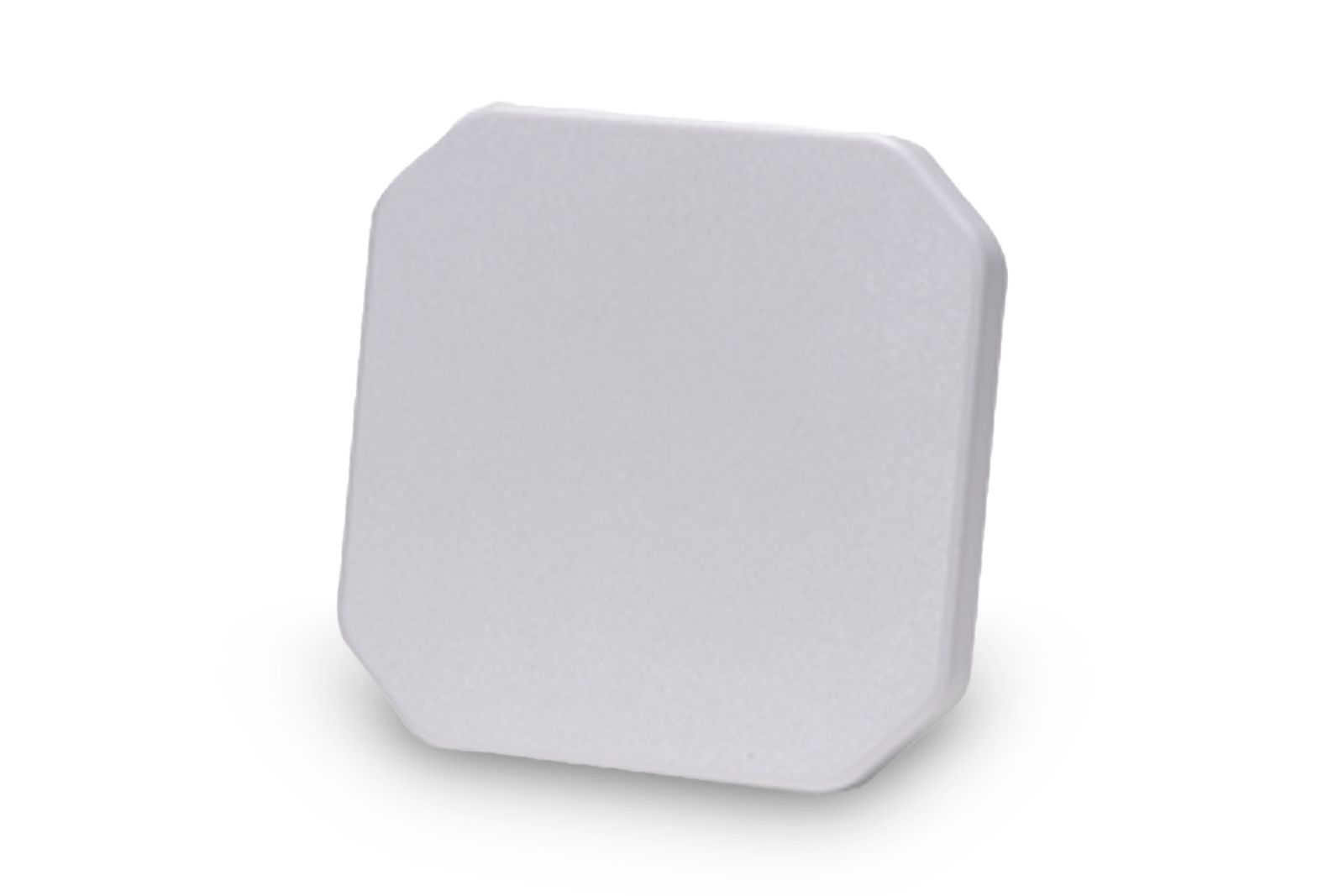
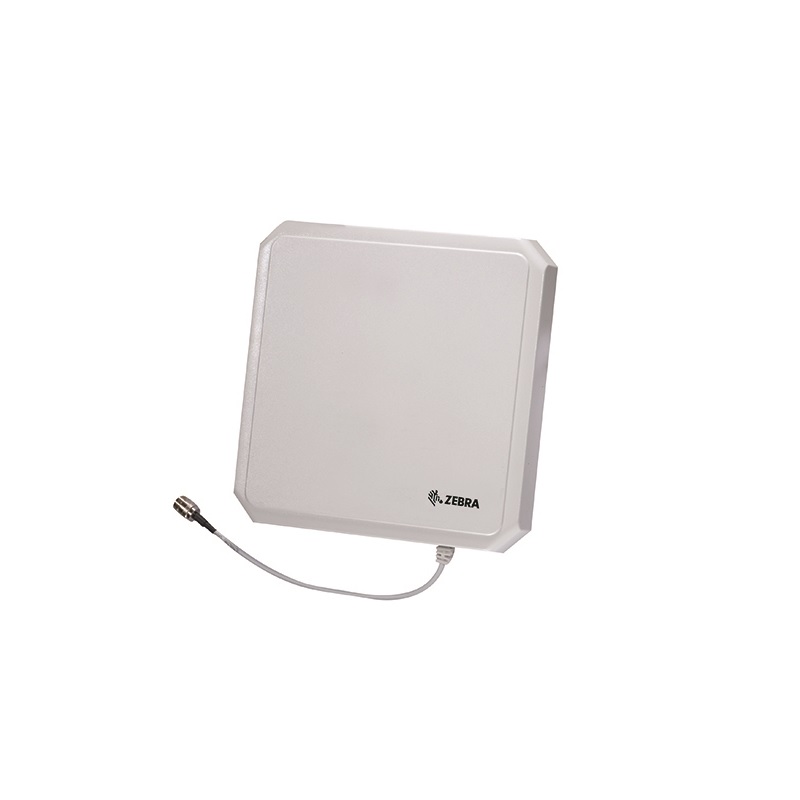
Plate-type RFID antennas: RFID panel antennas are the most common type of RFID antenna, usually square or rectangular in shape, with a plastic casing and a metal plate on the back. This type of antenna usually has a long reading range, from 1 to 10 meters, depending on the gain, polarization type, and the type of RFID tag used in the system. This type of RFID antenna is usually mounted on a bracket and used in RFID systems for warehouse management, asset management, supply chain management, access control, etc.
RFID Panel Antennas
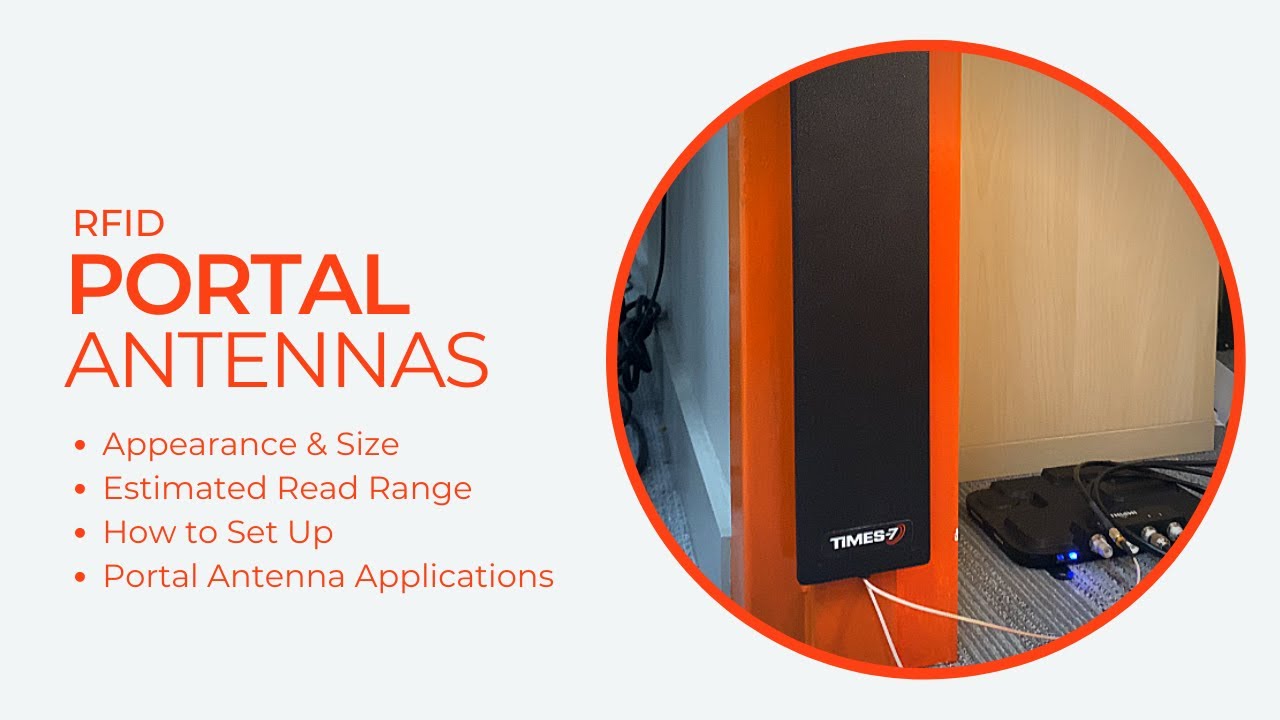
RFID Portal Antennas: RFID portal antennas are usually designed in a rectangular or square shape, installed at entrances, with a reading range of 3-4 meters. This type of antenna is usually mounted at the entrance, on a metal frame, or directly on the wall, and is widely used in RFID asset management, RFID document management, etc.
RFID portal antennas
RFID Shelf Antennas: Shelf antennas are also usually designed in a square or rectangular shape, with side dimensions of about 30cm. As an indoor RFID antenna, its waterproof IP rating is approximately IP52. These RFID antennas typically have a reading range of about 3m and are placed directly on tabletops, display stands, or shelves. They are commonly used in RFID jewelry management, RFID medical management, etc.
RFID Shelf Antennas
Ground RFID Antennas: Ground RFID antennas are usually rectangular with a high load capacity, have a plastic protective layer, and an average reading range of 3m or more, depending on the type of tag and the power of the RFID reader. This type of antenna is commonly used in RFID systems for event management, sports management, etc.
Desktop RFID Antennas: This type of RFID antenna is usually compact, about 7-15 cm in size, with a short reading range of only a few centimeters, and is used in RFID systems for library management, access control, etc.
Classification of RFID Antennas by Design
Includes:
Dipole RFID Antennas: Designed with two conductive elements, usually linearly polarized, simple, and with good performance, used in RFID systems for asset management, warehouse management, etc.
Monopole RFID Antennas: Designed with one pole, compact, suitable for RFID applications with a short reading range.
Monopole RFID Antennas
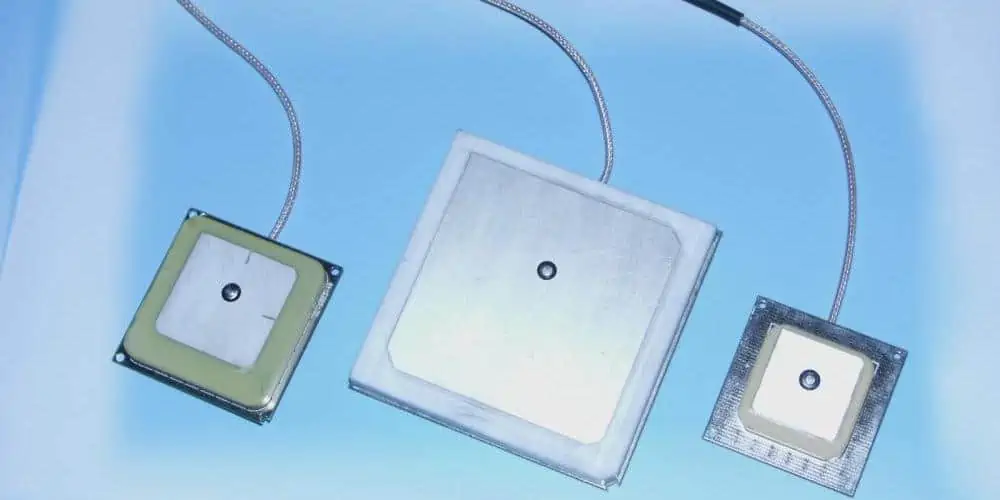
RFID Patch Antennas: These have a flat rectangular structure, use a microstrip design, are usually circularly polarized, thin and lightweight, and are used for fixed RFID readers, conveyor systems, automatic gates, etc.
RFID Yagi Antennas: Consist of a drive element, a reflector, and one or more directional elements, and are commonly used in RFID time attendance systems, RFID toll collection systems, etc.
RFID Loop Antennas: Consist of a circular or rectangular wire loop, and are commonly used for low-frequency and high-frequency RFID systems, especially anti-counterfeiting RFID.
Classification of RFID Antennas by RFID Tag
Includes:
Low-frequency RFID antennas, operating frequency 125 – 135 kHz, designed as a coiled RFID tag.
High-frequency RFID antennas operate in the 13.56 MHz frequency range and are designed in coiled or rectangular shapes.
Ultra-high frequency RFID antennas operate in the 860-960 MHz frequency range, offering a long reading range and a dipole antenna design.
Guide to Choosing the Right RFID Antenna
As mentioned, choosing the right RFID antenna is crucial to ensuring optimal system performance. Therefore, when selecting an RFID antenna, you need to pay attention to the following basic points:
Depending on your actual needs, regional regulations, and applicable international standards, choose the appropriate RFID frequency range.
RFID antennas have two polarization types: circular polarization and linear polarization. Choose the correct polarization type to optimize the antenna’s operating range.
The gain of an RFID antenna is its ability to efficiently concentrate energy for transmission.
RFID antennas transmit and receive signals in a specific direction. Therefore, gain affects the antenna’s reading range and bandwidth; the higher the gain, the better the antenna’s directional capability, the longer the reading range, and the greater the coverage distance.
When choosing an antenna, businesses need to consider environmental factors, prioritizing RFID antennas with waterproof and dustproof features.
Choose the RFID antenna size based on the actual application area of the system.
The beam width of an RFID antenna is the area where most of the power is radiated; a wider beam width results in a wider coverage range and a shorter reading range. Higher gain means a smaller beam width, and vice versa.
The orientation of RFID antennas includes directional and omnidirectional antennas. Directional antennas create a conical wave field, while omnidirectional antennas provide a 360-degree coverage on a plane.
IT Nam Viet – A Reputable Company Specializing in Comprehensive RFID Solutions in Vietnam
IT Nam Viet is proud to be one of the pioneering and reputable companies in the field of RFID solution provision in Vietnam. With over 10 years of experience, we are a strategic partner of hundreds of large and small businesses, committed to providing customers with high-quality RFID solutions at the most reasonable cost.
IT Nam Viet – A Reputable Company Specializing in Comprehensive RFID Solutions in Vietnam
We specialize in providing genuine RFID products, including RFID readers, RFID tags, RFID accessories, RFID printers, etc., from renowned brands such as Zebra, Impinj, etc.
The differentiating factor that helps IT Nam Viet assert its position is its professional work process, from surveying and consulting to designing, manufacturing RFID labels, and technology transfer. Our team of engineers at IT Nam Viet is always ready to support customers 24/7, ensuring the system operates reliably and accurately.
For us, the customer is at the center, and customer satisfaction is the measure of our business development. Therefore, we are committed to partnering with businesses to optimize processes, minimize operating costs, and enhance competitiveness in the market.
Company Address: 177/22 National Highway 1K, Linh Xuan Ward, Ho Chi Minh City
My name is Le Nam Viet, currently FOUNDER & CEO of Nam Viet IT Company, I graduated from Ho Chi Minh Polytechnic University. I have more than 3 years of experience providing RFID chip technology solutions, RFID scanners, barcode labels and barcode readers. It’s a pleasure to share my knowledge with readers.




 Tiếng Việt