Home » News » What is RFID Interference? Causes and Effective Solutions
What is RFID Interference? Causes and Effective Solutions
RFID interference reduces warehouse management efficiency? Are RFID tag readout rates ineffective? Are goods passing through RFID scanners inaccurate?… All of these significantly impact business operations. This article from IT Nam Viet will help you understand more about RFID interference, its causes, and effective solutions. Don’t miss it!
RFID Interference
What is RFID interference?
RFID is a radio frequency identification technology that has been widely applied in many different fields, such as warehouse management, healthcare facility operations management, livestock farming, and library management, among others.
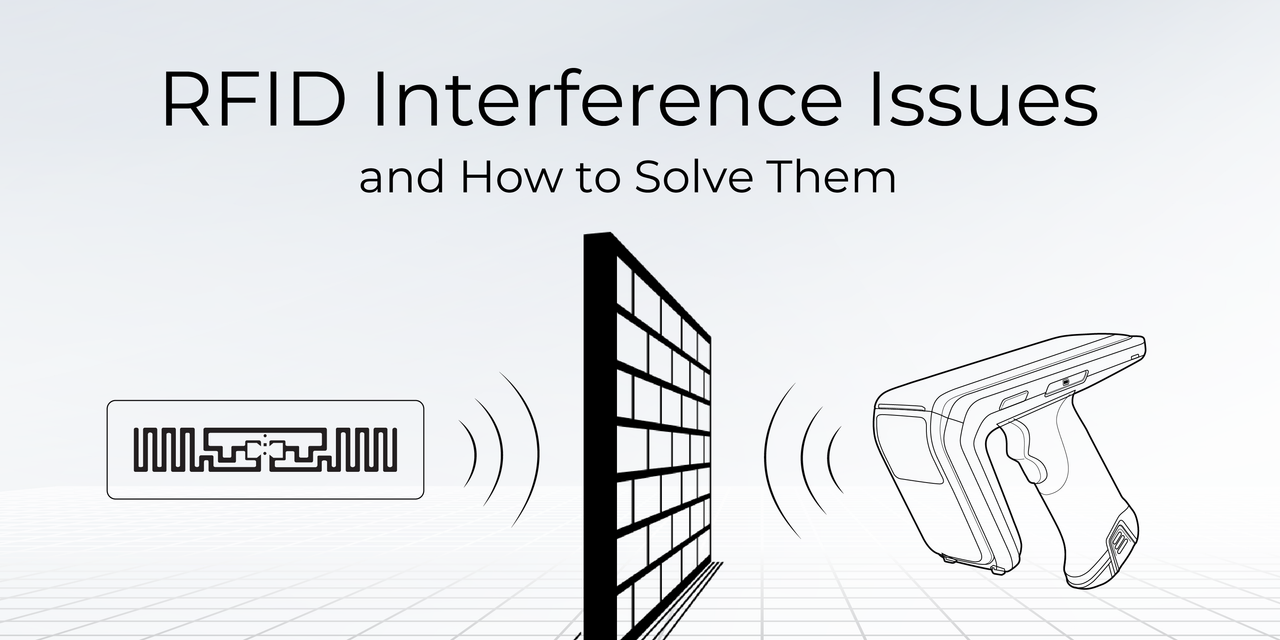
RFID operates by transmitting wireless signals between an RFID reader and an RFID tag. Therefore, RFID interference occurs when these radio waves are obstructed, reflected, or absorbed by surrounding environmental factors, preventing the signal from being transmitted or received completely.
RFID interference problems and how to overcome them.
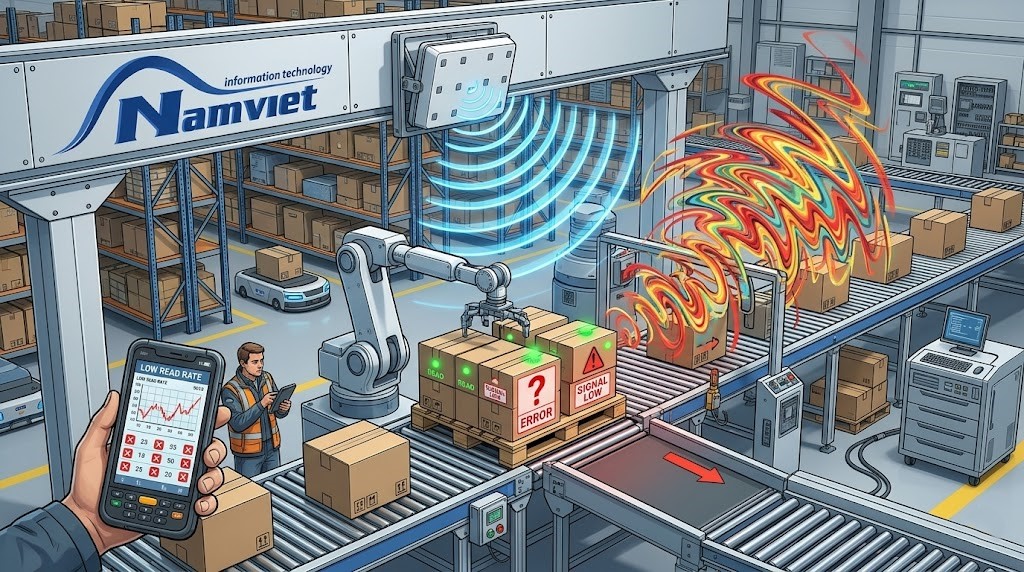
RFID interference can affect system operation, reducing read rates, causing readers to miss tags, resulting in inaccurate inventory data, or even asset loss. Furthermore, reflected waves can cause RFID readers to accidentally scan tags outside the target area, disrupting data throughout the entire system.
RFID systems are susceptible to signal interference and operate unreliably, forcing businesses to proactively address the issue through manual counting, which is both time-consuming and costly in terms of personnel.
Understanding the Causes of RFID Interference
To find the right and most effective solution, you need to understand the common causes of RFID interference, including:
Liquid and metallic environments
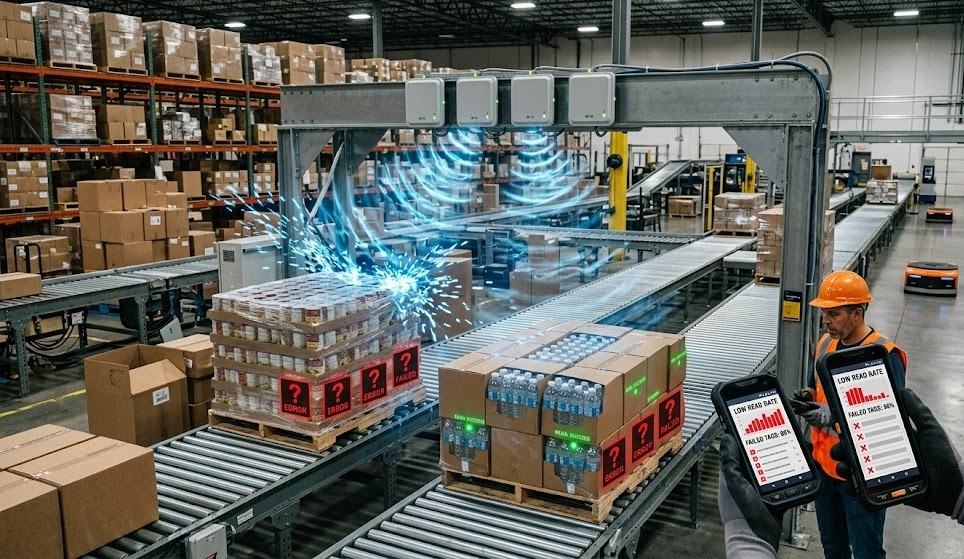
Liquids and metals are considered two “mortal enemies” of RFID systems. Metal surfaces act like mirrors to RFID radio waves; the waves hitting the metal are reflected back, creating blind spots that cause interference, preventing the reader from recognizing the RFID tag attached to the object.
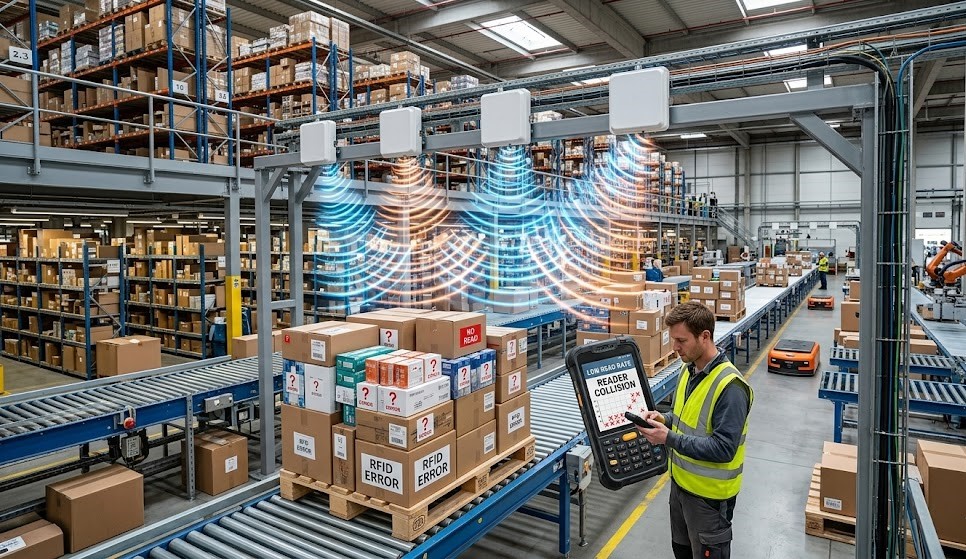
This often happens in large-scale warehouse areas where many antennas and readers are placed close together. In this case, the signals from one RFID reader may overlap with the coverage area of another reader, causing interference.
RFID interference caused by RFID reader collisions.
RFID tag conflict
This happens when too many RFID tags are in the same reading area; the RFID tags will simultaneously send signals back to the reader, overloading the reader’s processing capacity, leading to RFID interference and missed tag readings.
RFID interference is caused by conflicts between RFID and wireless systems.
Accordingly, a fairly common type of RFID interference is caused by conflicts between RFID and wireless systems such as Wi-Fi, Bluetooth, etc. Of course, this conflict only occurs when both systems use the same frequency band.
The table below shows the risk of interference between RFID frequencies and each wireless network system:
Frequency
RFID bandwidth
Other wireless networks
58KHz – 1KHz
EAS Electro magnetic Tags
125 – 135KHz
LF Passive Tags
7.4KHz – 8.8MHz
EAS Swept-rf Tags
13.56MHz
HF Passive Tags
868MHz – 928MHz
UHF Passive Tags
IEEE802.15 WPAN (Zigbee @ 868 & 915MHz)
902MHz / 111.5KHz2.4GHz / 111.5KHz
EAS Re-radiating Tags
2.4GHz
Some WiFI based active Tags
IEEE802.11b & g WLAN IEEE802.15 WPAN (Bluetooth & Zigbee)
5GHz
IEEE802.11a WLAN
60GHz
IEEE802.11ad WiFi
How to Identify RFID Interference?
Accordingly, there are four signs that operators can easily recognize when the RFID system is experiencing interference:
RFID scanning is inconsistent and lacks stability.
Handheld RFID scanners require constant changes in angle and distance.
The RFID reading range is significantly reduced compared to the manufacturer’s specifications.
Actual data differs from the results displayed in the management software.
…
How to Effectively Fix RFID Interference
Accordingly, IT Nam Viet would like to suggest some solutions to overcome RFID interference as follows:
Research, consider, and use metal-resistant and water-resistant RFID tags to ensure stable operation in metal and liquid environments.
Use circular polarized antennas for multi-directional tags or straight polarized antennas for increased reading range and better penetration if the tag is fixed in orientation.
Test the frequency range to be used by the RFID system in the project deployment environment beforehand. Optimizing the frequency and protocol can minimize the impact of interference.
Pre-calculate the frequency, protocol, and standards used by RFID devices.
For systems using 2.4GHz active tags, check the IP range of the RFID system and the Wi-Fi network used in conjunction with it.
Carefully plan and arrange the RFID reader devices to ensure optimal performance.
Proper placement and orientation of RFID antennas ensure optimal reading accuracy and minimize interference.
Install shields or wave-absorbing materials around the portal reader to prevent reflections from walls, floors, or metal shelves.
Conduct small-scale RFID system testing before deploying the entire system on a large project.
IT Nam Viet – A Comprehensive RFID Solution Provider in Vietnam
It’s important to understand that RFID deployment isn’t simply a matter of buying equipment and plugging it in. Especially in complex industrial environments, the system needs to be specifically designed for each different functional area. IT Nam Viet is proud to be a reputable RFID solution provider in Vietnam, with over 10 years of experience and a diverse range of implemented solutions across various industries and sectors.
IT Nam Viet – Specializing in providing comprehensive RFID solutions in Vietnam
IT Nam Viet distributes a wide range of genuine RFID devices and manufactures custom RFID tags with customizable sizes, antennas, and chip types. At IT Nam Viet, all products are guaranteed 100% genuine, imported from renowned global RFID brands, with clear warranty policies, offering customers many suitable choices.
The RFID project acceptance and implementation process at IT Nam Viet is as follows:
Clearly understand customer requirements and conduct on-site surveys.
Advise on RFID technology suitable for the business’s field of activity and requirements.
Select the appropriate RFID solution.
Demonstrate the product.
Deliver the final RFID system and implement large-scale projects.
In summary, RFID interference is a significant obstacle to many warehouse digitalization projects, leading to serious consequences such as asset and goods loss. However, this problem can be completely resolved if surveyed and designed by a team with in-depth expertise. Don’t hesitate, contact the Nam Viet IT team today to have our engineers directly survey and demo the most optimal solution for your business.
Company address: 177/22 National Highway 1K, Linh Xuan Ward, Thu Duc City, Ho Chi Minh City, Vietnam
Showroom: 177/22 National Highway 1K, Linh Xuan Ward, Thu Duc City, Ho Chi Minh City
Showroom in Cambodia: No. 6 Street 24BT, Thnaot Chrum, Boeung Tumpun 2, Khan Mean Chey, Phnom Penh
My name is Le Nam Viet, currently FOUNDER & CEO of Nam Viet IT Company, I graduated from Ho Chi Minh Polytechnic University. I have more than 3 years of experience providing RFID chip technology solutions, RFID scanners, barcode labels and barcode readers. It’s a pleasure to share my knowledge with readers.




 Tiếng Việt