Home » News » Top 10 Factors Affecting RFID Tag Reading Range and How to Optimize Technical Standards
Top 10 Factors Affecting RFID Tag Reading Range and How to Optimize Technical Standards
In RFID project deployment, optimizing the RFID tag reading range is often a major headache for system engineers. In reality, RFID tag reading range can be influenced by numerous factors related to the equipment and environment. This article by IT Nam Viet will help you explore the top 10 factors affecting RFID tag reading range, as well as solutions for optimizing technical standards. Read on!
Factors Affecting RFID Tag Reading Range
What is the RFID tag reading range?
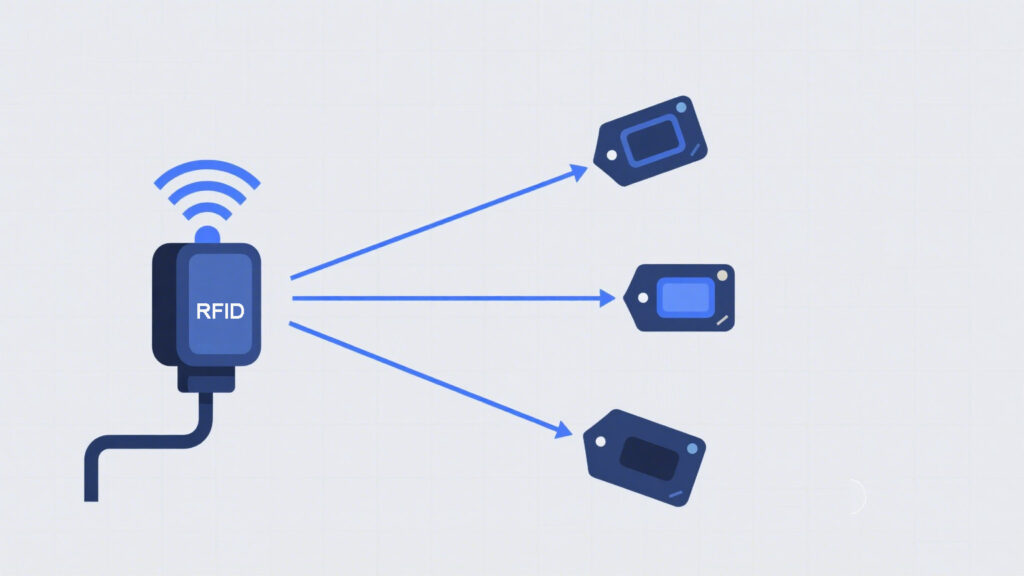
RFID reading range refers to the maximum distance at which an RFID reader and RFID tag can effectively communicate and exchange data. Accordingly, RFID reading ranges from a few centimeters to over 100 meters.
Specifically:
Low frequency: Reading range 30cm or less
UHF (Ultra High Frequency): Reading range 30cm – 10m
Microwave frequency – active RFID tags: Reading range 10 – 100m
Antenna gain is a technical specification used to measure an antenna’s ability to focus the energy of radio waves radiated in a specific direction, compared to a standard source. Simply put, antenna gain indicates how well an RFID antenna can “gather” and “transmit” a signal in one direction.
Accordingly, the antenna gain directly affects the transmission radius of the RFID antenna. This means that the higher the RFID antenna gain, the farther the RFID tag reading range. Conversely, the lower the RFID antenna gain, the shorter the RFID tag reading range.
In practical RFID projects, to meet the requirements for long-distance RFID tag reading, the device must be equipped with an antenna with a minimum gain of 8 dBi or higher, while systems with a short reading range may require an antenna with a gain of 7 dBi or less. Low-gain antennas are generally smaller than high-gain antennas.
Antenna polarization type
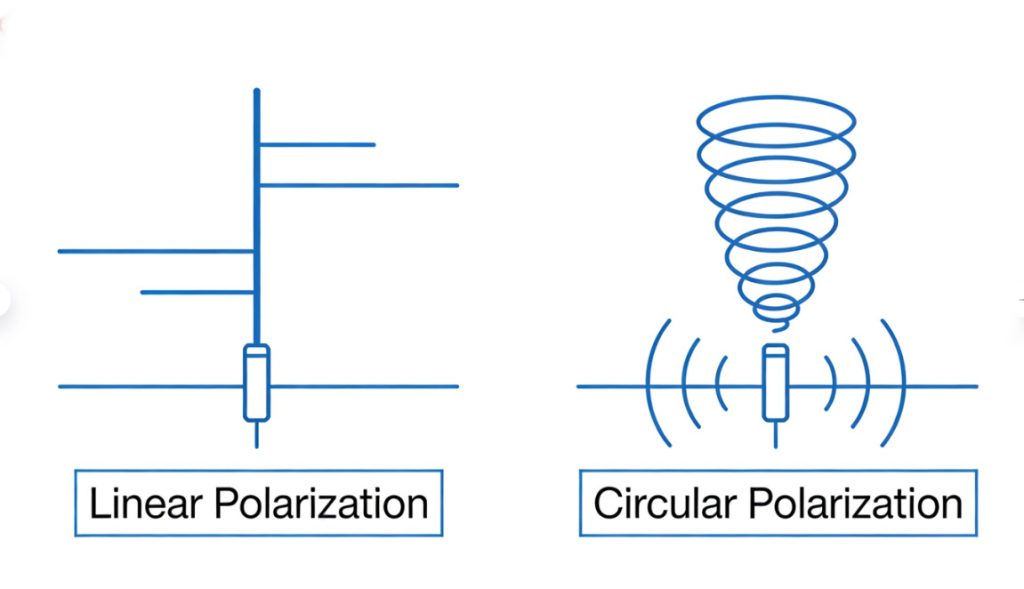
Antenna polarization refers to the direction of oscillation of the electric field in the electromagnetic spectrum as it radiates and propagates through space. While antenna gain determines how far a wave travels, polarization influences the shape and direction of the wave’s path.
Antenna polarization type
Antenna polarization refers to the shape of the wave field that the antenna produces. Linear polarized antennas focus the wave propagation on a fixed plane, while circular polarization propagates the wave in a spiral pattern. Linear polarized antennas have a longer RFID reading range than circular polarized antennas, while circularly polarized RFID antennas can read tags from multiple directions.
RFID tag size
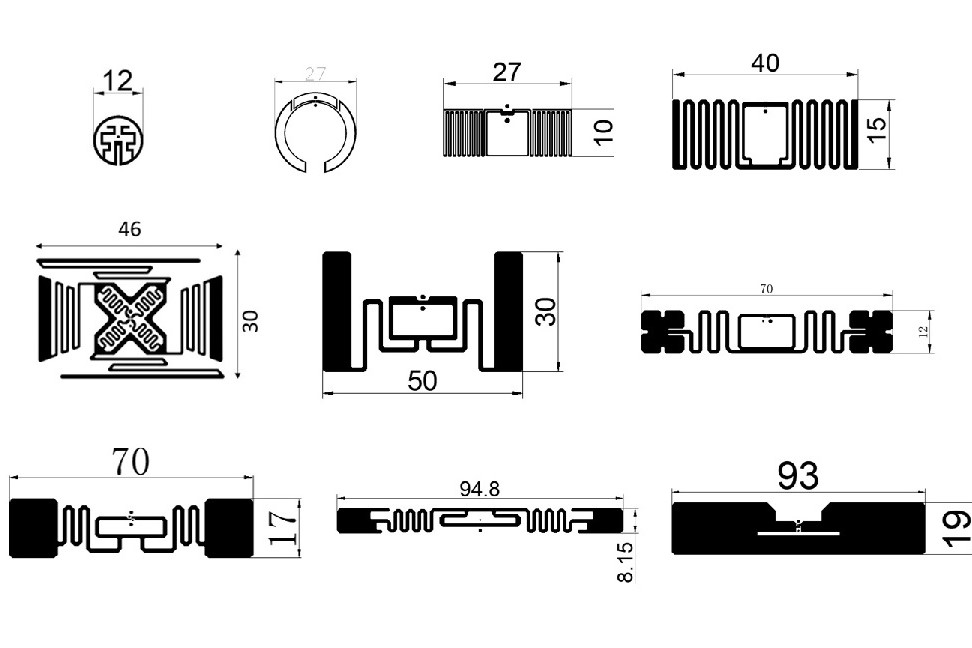
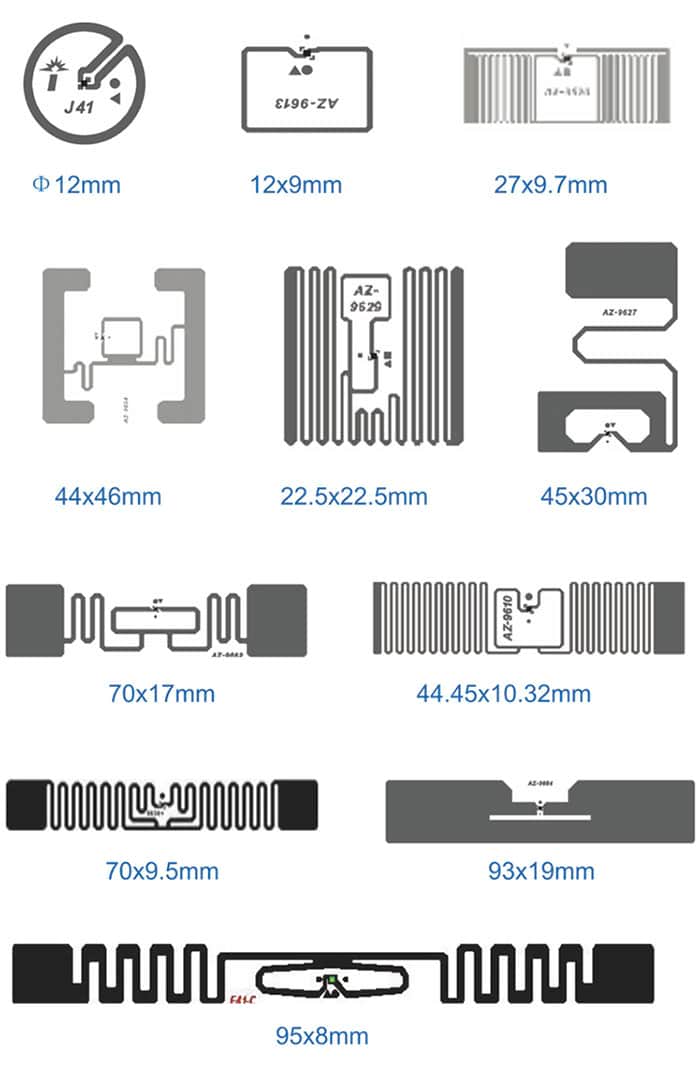
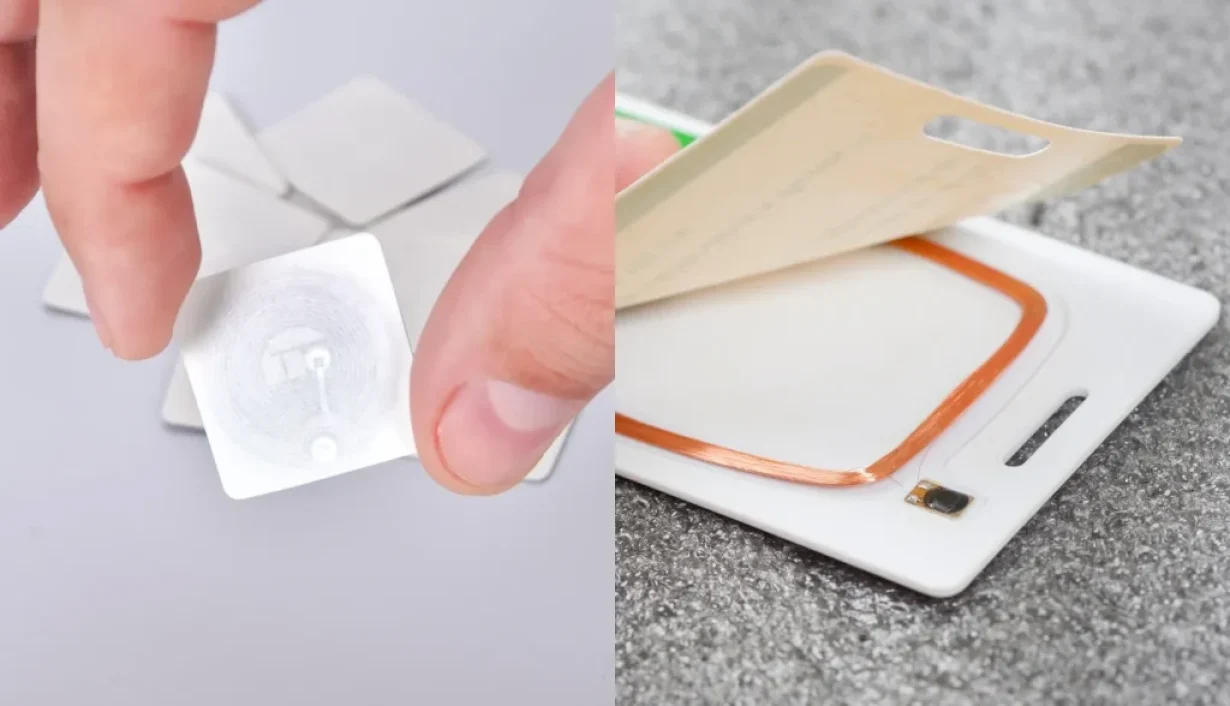
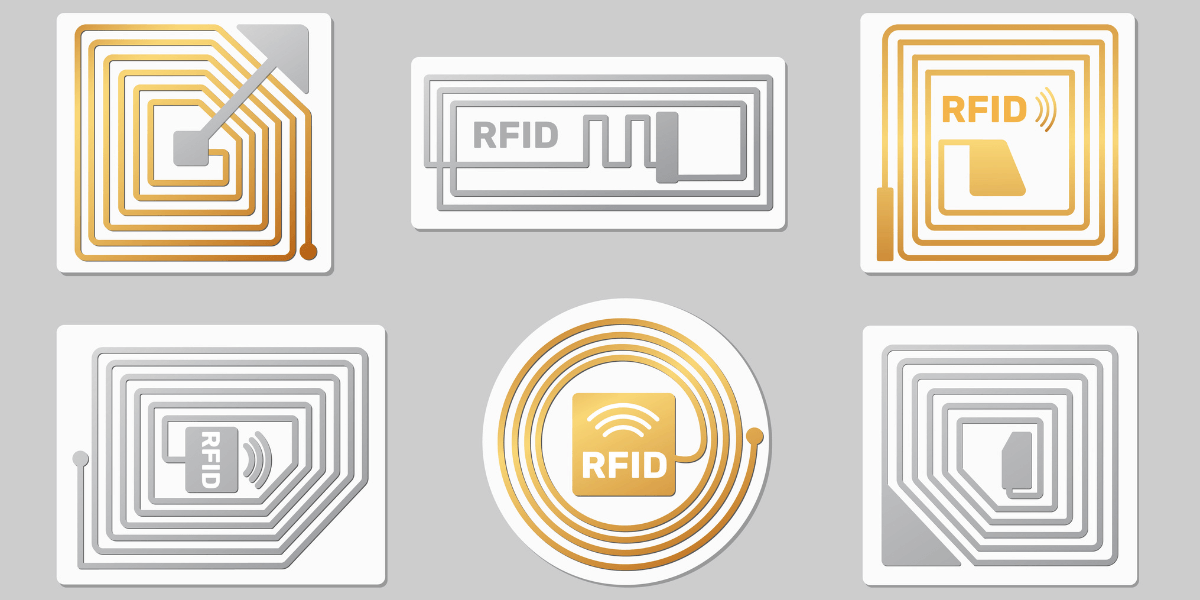
RFID tag size is one of the factors affecting RFID tag reading range that you shouldn’t overlook. RFID tags are designed and manufactured in various sizes to meet the different needs of businesses. Accordingly, the larger the RFID tag, the greater the antenna integration capacity, and naturally, the longer the RFID reading range. Conversely, smaller RFID tags will have a shorter reading range due to the smaller antenna integration capacity.
RFID tag orientation
This is a factor affecting RFID tag reading range that is often overlooked during system operation. To obtain maximum energy, the flat surface of the RFID tag must be directly facing the transmitting plane of the antenna. The orientation of the RFID tag will affect the reading ability of linearly polarized antennas but will not affect circularly polarized antennas.
RFID tag materials and density
The material used to make the RFID tag also affects its reading performance. Furthermore, when there are too many RFID tags in the same area, the identification signals can overlap, causing RFID interference and reducing the reading range.
RFID tag materials and density
RFID tag placement location
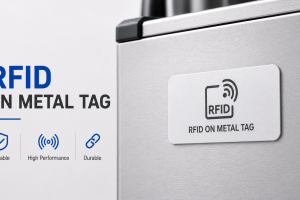
You may not know this, but the placement of RFID tags or labels on objects affects their reception capabilities, sometimes completely altering the actual reading range compared to the theoretical specifications. Attaching RFID tags to hidden corners or concealed behind surfaces that block signals, such as liquid containers or metal components, creates radio “blind spots.” Why? Because metal and liquids are sworn enemies of RFID; metal reflects radio waves, while liquids absorb them.
RFID tag placement location
Configure RFID card reader
Accordingly, RFID readers are capable of customizing the power supplied to the antenna. Higher power consumption results in a longer range, while lower consumption results in a shorter range. Users need to pay attention to two parameters: the RFID reader’s power and its receiving sensitivity.
The higher the RFID reader’s power, the greater its RFID tag reading range. However, users should be aware of power limit regulations to avoid interfering with other devices.
And when the RFID reader is configured at maximum sensitivity, it can pick up even weak signals from distant tags, thereby increasing the ability to read more tags simultaneously within the coverage area.
Configure RFID card reader
RFID antenna cable length
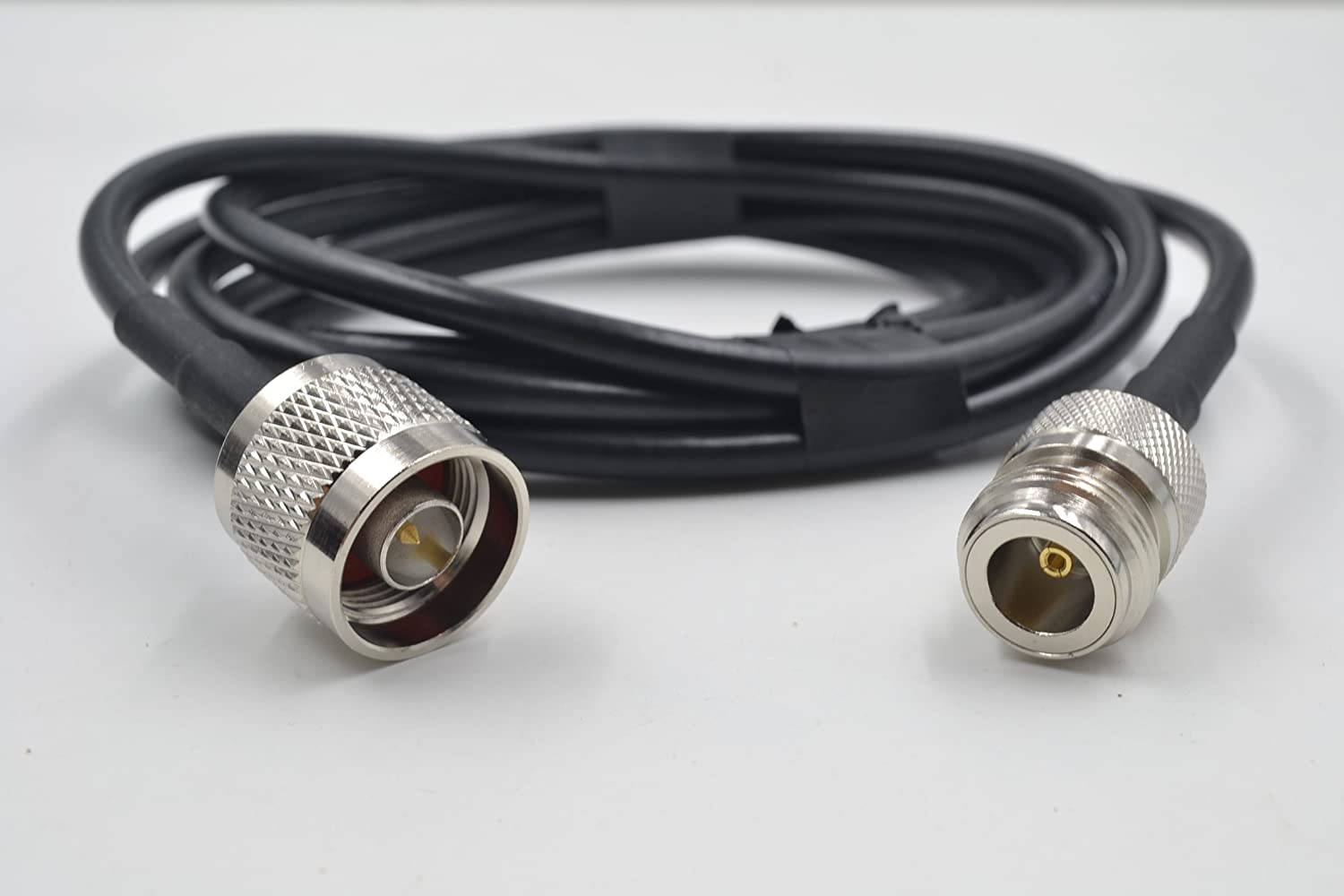
The RFID antenna cable is the device that connects the RFID antenna to the RFID reader. Therefore, the longer the RFID antenna cable, the greater the power loss in the system, which degrades the signal strength and significantly reduces the RFID reading range. Each meter of cable can cause a signal loss of 0.3 – 0.5 dB.
RFID antenna cable length
Communication adapters and extenders
An adapter is used to connect two different types of RFID antenna cables, potentially causing a system attenuation of about 1/3 dB. Meanwhile, a communication extender splits a single RFID antenna into multiple ports, resulting in a 1 dB attenuation.
Environmental factors affect RFID reading range.
As mentioned in many previous articles, environmental factors can affect the RFID tag reading range, especially water, metal, fluorescent lights, large machinery, etc.
How to Optimize RFID Tag Reading Range
Based on the factors affecting RFID tag reading range mentioned above, IT Nam Viet would like to share with our readers the following ways to optimize reading range:
Businesses need to choose RFID antennas with the appropriate gain for their needs; ideally, they should seek assistance from professional suppliers.
Depending on the specific needs, businesses should choose the appropriate antenna polarization. For optimal reading range, linear polarization antennas are preferred, while for optimal RFID tag reading area, circular polarization antennas are the irreplaceable choice.
Choose RFID tag sizes that suit your needs; generally, larger RFID tags are preferred, however, larger RFID tags will be more expensive.
When attaching RFID tags to any goods or products, businesses need to ensure the RFID tag is attached in the best direction for the RFID antenna.
The RFID tag should be positioned directly facing the antenna, and metal-resistant RFID tags should be chosen to optimize the reading range.
Consider setting a high power to increase the RFID reading range.
Check the reader’s reception sensitivity during project implementation.
Connect the RFID reader and antenna using the shortest possible cable, minimizing the use of adapters and extenders (only use them when absolutely necessary).
Position the RFID reader and tags strategically to avoid obstructions and interference sources.
Use RFID system management software to optimize parameters and enhance performance.
IT Nam Viet – A Provider of Comprehensive RFID Implementation Packages at Competitive Prices
If your business is looking for a comprehensive RFID solution provider, consider IT Nam Viet. We are proud to be a reputable RFID technology company in Ho Chi Minh City and nationwide, having become a strategic partner of hundreds of large and small businesses, committed to providing customers with high-quality, genuine products and optimal pricing.
We have a team of highly skilled engineers who conduct on-site surveys, assess obstacles, and design suitable RFID systems. In addition, we build and communicate RFID costs to customers transparently and clearly, ensuring optimal benefits for businesses.
Custom RFID label manufacturing
IT Nam Viet offers a wide range of RFID equipment, including RFID readers, RFID printers, RFID tags, RFID labels, barcode scanners, and more – all genuine and high-quality products. We also design and manufacture RFID labels with the exact RFID chip, antenna, and size requested by the customer, ensuring optimal suitability for each project. Contact IT Nam Viet immediately via Hotline 0962.888.179 for assistance!
The technical specifications in product catalogs are usually based on manufacturer testing in an ideal environment free from obstacles and interference. Therefore, when applied in real-world environments, this range will be affected by many factors such as liquid or metal environments, obstacles, blind spots, tag position, tag orientation, etc.
You can choose a linearly polarized antenna for optimal reading distance, or a circularly polarized antenna for optimal card reading area.
Understanding the factors affecting RFID tag reading range will help businesses build a standard, highly effective RFID system and optimize automation processes. If you need RFID technology consulting, contact IT Nam Viet immediately; we are ready to assist you as quickly as possible.
My name is Le Nam Viet, currently FOUNDER & CEO of Nam Viet IT Company, I graduated from Ho Chi Minh Polytechnic University. I have more than 3 years of experience providing RFID chip technology solutions, RFID scanners, barcode labels and barcode readers. It’s a pleasure to share my knowledge with readers.




 Tiếng Việt