
 Tiếng Việt

UHF RFID is one of the automatic identification technologies widely used in industries such as manufacturing, warehouse management, retail, logistics, enterprise asset management, and more. Unlike traditional barcodes that require direct scanning of each product, UHF RFID technology uses radio waves to communicate with RFID tags, allowing data to be read from a distance while processing multiple objects at the same time. So, what is UHF RFID? How does this system work? What are the investment costs?… Read the article below to find the answers.

What Is UHF RFID?
UHF RFID (Ultra High Frequency Radio Frequency Identification) is a technology used to identify objects using radio waves in the ultra-high-frequency band. One of the key advantages of UHF RFID is its ability to transmit data over distances of up to 12 meters, making data scanning and writing more convenient and faster than other technologies such as LF RFID or HF RFID.

UHF RFID operates in the 860 MHz – 960 MHz frequency range and complies with standards such as EPC Class 1 Gen 2, ISO/IEC 18000-63, RAIN RFID, and more. Thanks to its high-frequency characteristics, UHF RFID offers a longer read range, faster data transmission, and the ability to identify a large number of objects in a short period of time.
How UHF RFID Technology Works
A UHF RFID system consists of several key components: UHF RFID tags, RFID readers, RFID antennas, and management software. An RFID tag contains a chip and an antenna that allow it to communicate with the reader. The reader emits radio signals, collects data from the tag, and sends it to management software for processing and analysis. With this structure, UHF RFID can operate effectively across many different industries.

Specifically:
- The reader emits radio signals, creating a reading zone around the device.
- The UHF RFID tag receives energy from the reader’s radio waves, activating the RFID chip inside the tag.
- Once activated, the RFID label sends information back to the reader via radio signals.
- The collected data can be connected to management software, helping businesses track the status of goods in real time.
UHF RFID Standards
These include:
- ISO 18000-6: This standard specifies requirements for RFID frequencies and RFID tag communication protocols, including ISO 18000-6A and ISO 18000-6B. Each part uses a different communication method, but both aim to improve the identification and tracking of goods.
- EPCglobal: This standard enhances interoperability between different RFID systems, making it easier for businesses to share information throughout the supply chain.
- SAE AS5678: This standard is designed for RFID applications in aviation. It specifies requirements for security and resistance to environmental interference, helping ensure stable RFID system operation even under harsh conditions.

Common Types of UHF RFID Tags and Labels
A UHF RFID tag basically consists of two components: an antenna and an IC. The tag antenna is unique to each specific tag type, and its role is to receive RF waves, activate the IC, and then reflect modulated energy back to the RFID antenna. Each IC type is unique, and only a limited number of manufacturers produce them. The main difference between ICs lies in the number of bits available in their respective memory banks.

Choose RFID labels and tags from our product categories below:
RFID Tags RFID Tags RFID Cards (PVC) RFID Tags RFID Tags RFID Tags RFID Tags RFID Tags RFID Tags RFID Library Tags RFID Library Tags
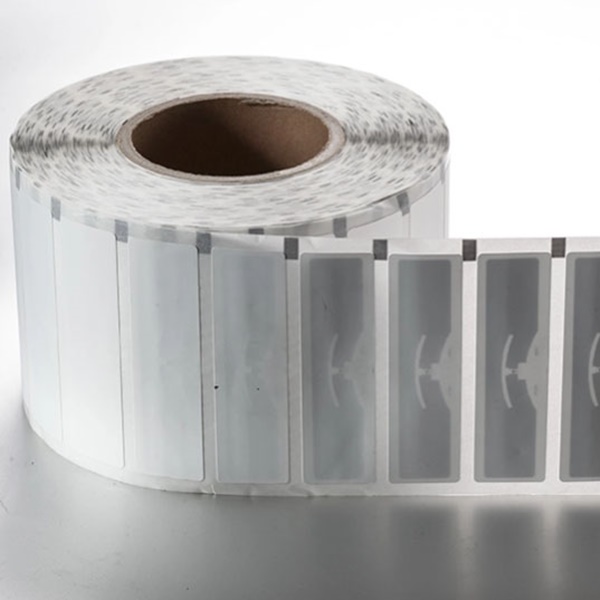


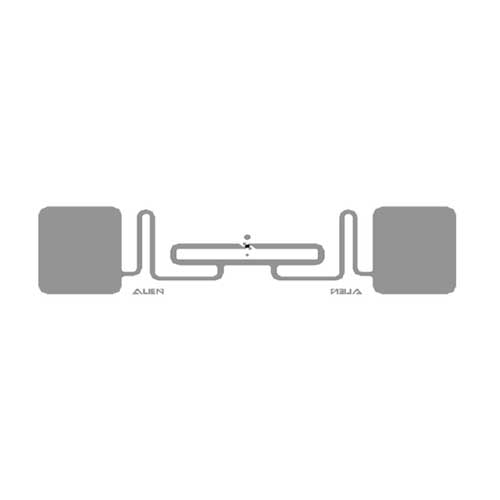

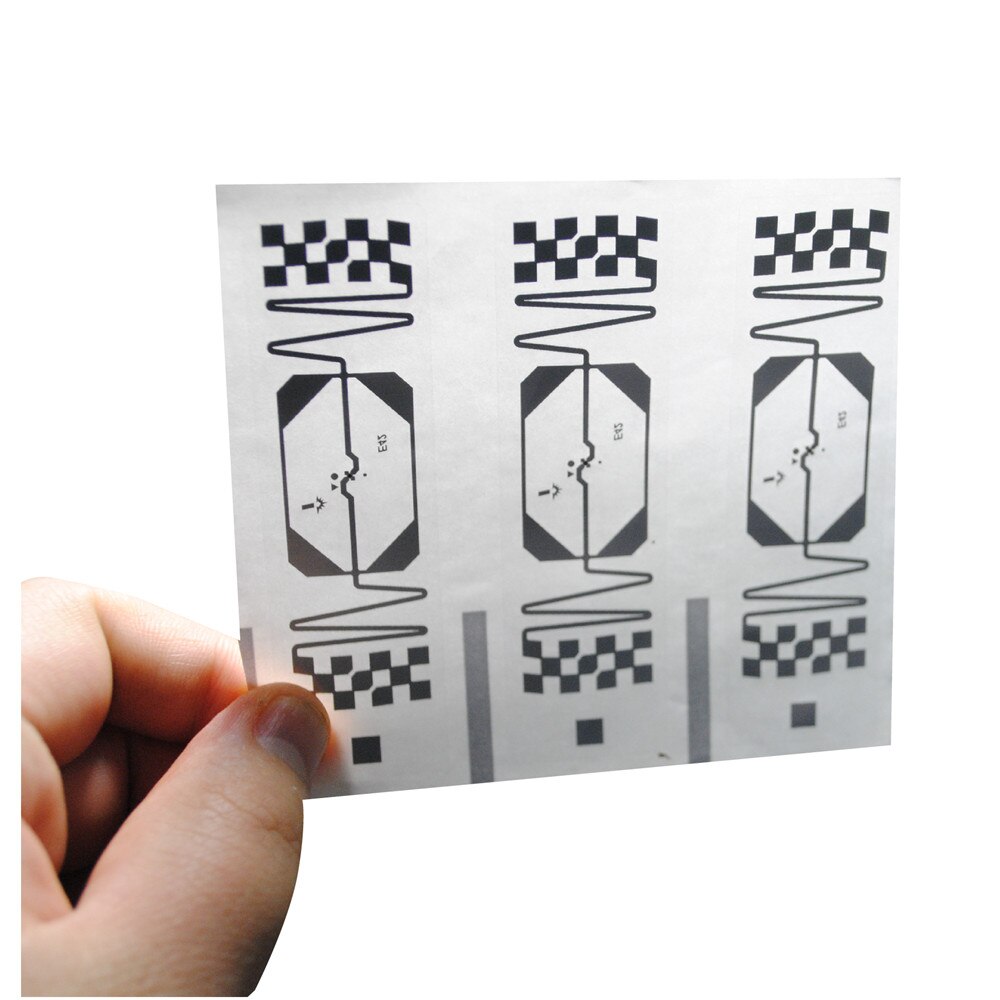
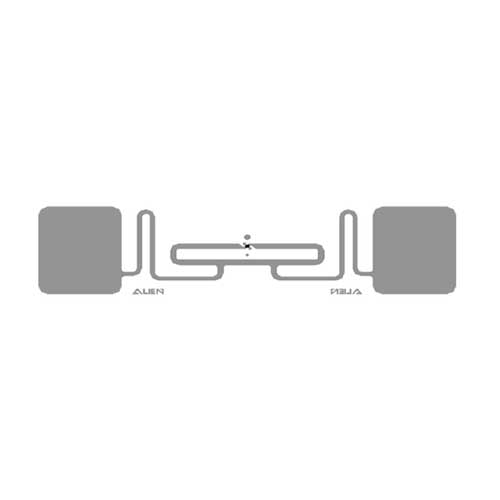


UHF RFID tags are typically compact, making them easy to install or attach to virtually any product or pallet. They can be manufactured from various materials such as paper, waterproof plastic, and more, ensuring flexibility across different environments. Depending on usage requirements and operating conditions, businesses can choose from various suitable types of RFID tags and labels.
Below are some common types of UHF RFID tags and labels:
RFID labels and inlay tags: These are thin and typically manufactured on rolls containing thousands of tags. They can be fed through an RFID printer for printing and encoding. Their cost is relatively low, and they are easy to attach to products. They are commonly used in RFID retail applications, RFID warehouse management, and more.

Hard plastic RFID tags: This type of UHF RFID tag is usually made from materials such as ABS plastic, polycarbonate, and more. These tags come in different sizes and weights and are commonly used for industrial equipment, RFID asset management, and similar applications.
RFID Cards (PVC)
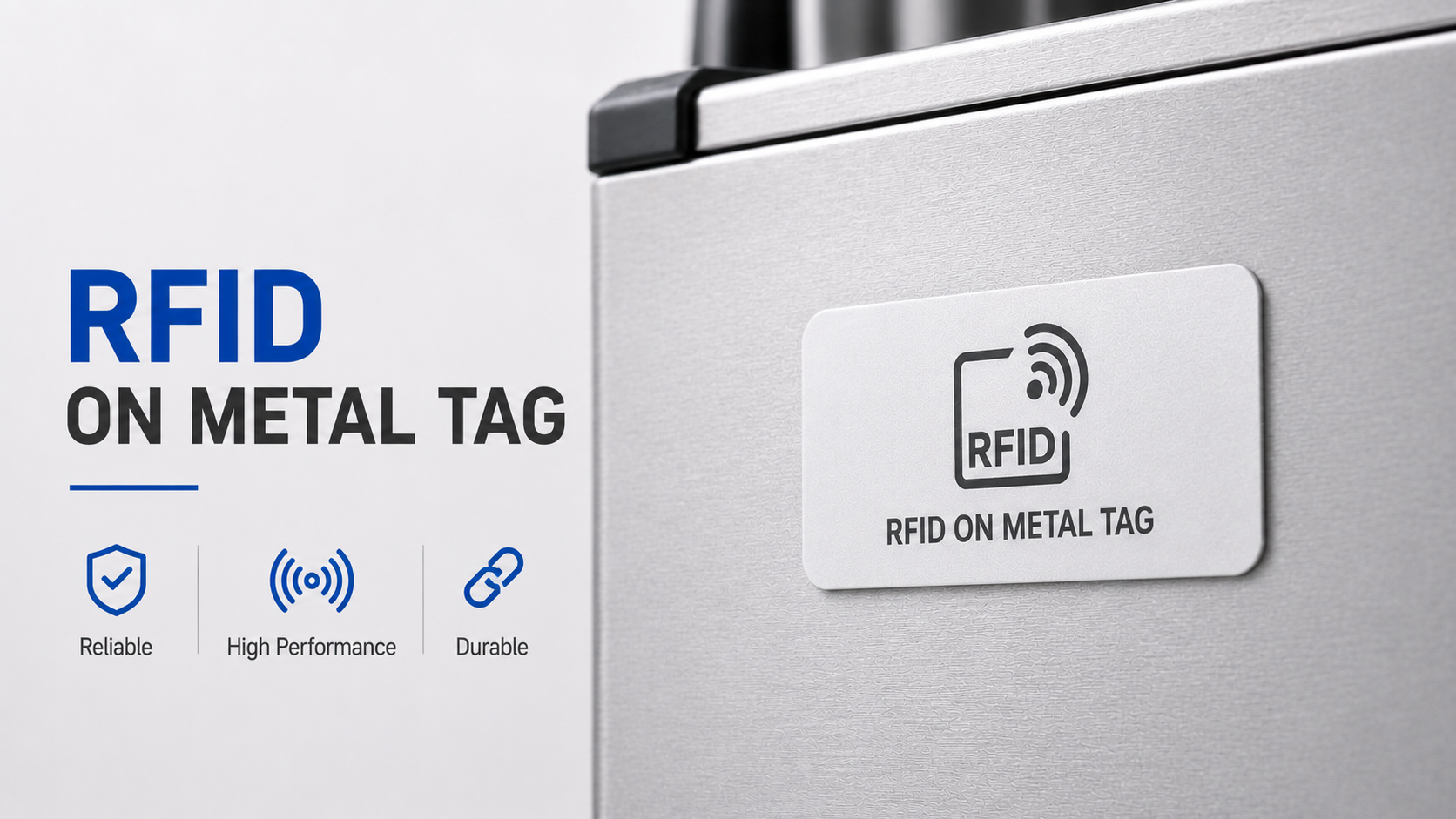
Metal-mount UHF RFID tags: These tags are specially designed to work effectively on metal surfaces and are commonly used in RFID technology applications for managing machinery, mechanical components, factory equipment, and more.
RFID On-Metal Tags RFID On-Metal Tags RFID On-Metal Tags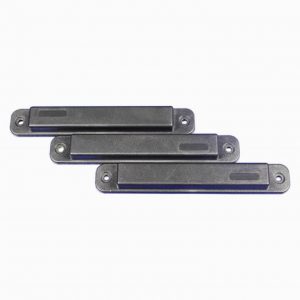

Advantages of UHF RFID Systems
Compared with traditional identification methods such as barcodes, UHF RFID offers many significant advantages, especially for businesses that need to manage large quantities of goods, assets, and operational data.
Below are the key advantages of UHF RFID systems:
- The ability to read data over long distances, from several meters to more than 10 meters, makes it easier for businesses to deploy automated RFID gate systems in warehouses, manage warehouse inventory, track pallets, manage production lines, and more.
- The ability to read multiple RFID tags simultaneously is a major advantage in warehouses, logistics operations, manufacturing plants, retail chains, and similar environments. This helps businesses shorten inventory counting time, reduce operational staffing requirements, and minimize human errors during data entry.
- UHF RFID operates using radio waves, so it does not require direct line-of-sight scanning, making it suitable for high-density storage environments.
- UHF RFID technology helps automate data collection processes, supporting inventory control, movement history tracking, operational performance analysis, and more.
- A complete UHF RFID system can connect with ERP, WMS, MES, and other systems. As a result, RFID data is not only used for identification but also becomes a valuable data source for production management, planning, and supply chain optimization.

Applications of UHF RFID
As mentioned above, UHF RFID is widely used in many industries thanks to its fast object identification capabilities and high efficiency.
- UHF RFID applications in warehouse management: Helps businesses automate inbound receiving, control outbound goods, track item locations, and perform inventory counts, significantly reducing processing time, saving labor costs, and minimizing unnecessary manual errors.
- UHF RFID applications in manufacturing plants: Tracks incoming materials, manages components, controls production progress, traces product history, and more.
- UHF RFID applications in logistics and supply chains: Helps track parcels, manage containers, and control shipping and receiving, especially in automated warehouse models and large distribution centers.
- UHF RFID applications in enterprise asset management: Helps determine asset locations, track usage history, and perform fast inventory checks. It is commonly used in factories, schools, hospitals, construction companies, and more.
- UHF RFID applications in retail: RFID warehouse management, product control, and automated checkout support, making it effective for fashion stores, supermarkets, shopping centers, and similar business models.

Comparison of UHF RFID, HF RFID, and LF RFID
As mentioned, RFID is divided into several groups based on operating frequency bands, with LF RFID, HF RFID, and UHF RFID being the most common. Each technology has different characteristics, advantages, and limitations, making it suitable for different applications.
Comparison table of UHF RFID, HF RFID, and LF RFID:
| Comparison Criteria | LF RFID | HF RFID | UHF RFID |
| RFID Frequency | 125 kHz – 134.2 kHz | 13.56 MHz | 860 MHz – 960 MHz |
| Read Range | Under 10 cm | 10 cm – 1 meter | 1 meter – 12 meters |
| Read Speed | Slow | Fast (106 – 848 kbps) | Very Fast |
| Simultaneous Reading Capability | Lower | Moderate | Good |
| Applications | RFID applications in livestock management, animal management, and more. | RFID applications in libraries, RFID access control, contactless payments, and more. | Applications of RFID in Logistics, RFID asset management, goods tracking, automatic toll collection, and more. |
| Impact of Water and Metal Environments | Less affected | Durable, with low signal attenuation | Strongly absorbed, resulting in reduced read range |
| RFID Tag Cost | Relatively High | Moderate | Lower |
Comparison Between UHF RFID and Barcodes

| Feature | Barcode | UHF RFID |
| Range | Short (< 50cm) | Long (1m – 15m) |
| Scanning Speed | One at a time | Batch scanning |
| Scanning Position | Must face the laser directly | No direct line of sight required (the tag only needs to be within the read zone) |
| Durability | Easy to tear or fade | Durable and able to withstand harsh environments |
| Read/Write Capability | Read-only | Data can be written and overwritten multiple times |
In practice, barcodes are not outdated technology because they are still suitable for low-value products, small-scale operations, and simple processes. For large systems and enterprises that require fast inventory counting and management of hundreds of thousands of products, UHF RFID is a technology worth considering.
Challenges and Solutions When Implementing UHF RFID Systems
Although UHF RFID offers many benefits in terms of identification speed, simultaneous multi-tag reading, and management process automation, implementing UHF RFID still involves several challenges that require businesses to carefully assess their needs and choose suitable solutions.
Below are some challenges when implementing a UHF RFID system:
Impact of metal and liquids: UHF waves can be strongly reflected by metal surfaces or attenuated when traveling through environments containing large amounts of liquid. This can reduce the read range, create dead zones, or cause readers to miss tags. In such cases, businesses should consider using specialized anti-metal UHF RFID tags and test tag placement before large-scale deployment.
RFID tag placement and reader positioning: The performance of a UHF RFID system depends heavily on the placement of tags, antennas, and RFID readers. Therefore, if tags and readers are positioned in unsuitable locations, signals may be blocked, reflected, or create unintended read zones. During implementation, the system should be surveyed and designed based on the actual movement flow of goods, required identification distance, movement speed, and the spatial structure of the deployment area.

Read range: The read range depends on many factors such as reader power, gain, antenna orientation, RFID tag size and design, the tagged object, environmental obstacles, reflection, and wave interference. Therefore, businesses should conduct real-world testing rather than selecting equipment solely based on the advertised read range.
RFID costs: Compared with barcode systems, RFID implementation costs are relatively high, which can be a significant barrier for small businesses. However, when deployed according to actual needs, RFID can reduce inventory counting time, minimize manual operations, improve data accuracy, and increase automation. Therefore, businesses should evaluate costs based on total cost of ownership and long-term operational efficiency rather than simply comparing initial equipment prices.

Data management: Processing large volumes of real-time data from the system requires powerful software infrastructure and database optimization.
Standards and device compatibility: Not all tags, readers, or software can work together optimally. In addition to protocol compatibility, businesses also need to consider operating frequency bands, connection interfaces, APIs, and integration capabilities with existing systems.
IT Nam Viet – A Trusted Provider of Comprehensive RFID Solutions in Vietnam
IT Nam Viet specializes in providing comprehensive RFID solutions to meet the automation and management needs of businesses. We have more than 10+ years of experience and provide a wide range of equipment, including RFID tags, RFID readers, RFID labels, RFID printers, and more. In addition, IT Nam Viet designs and deploys complete RFID systems and has supported hundreds of businesses across the country.
In addition to ready-made equipment, IT Nam Viet provides custom RFID label manufacturing with sizes, antennas, chip types, and other specifications tailored to customer requirements. We deploy RFID across many fields, including RFID in manufacturing, RFID in warehouse management, RFID in asset management, RFID in access control, RFID in contactless payments, RFID in retail, RFID in construction, RFID in livestock farming, and more.
No matter what industry your business operates in, we are ready to provide consultation and support. We conduct on-site surveys and assess customer requirements, then develop a design and implementation plan that meets actual needs, fits the budget, and delivers high operational efficiency.
Contact Hotline (+84) 962 888 179 for consultation!
Frequently Asked Questions
With its long read range and ability to identify multiple objects at the same time, UHF RFID is becoming an effective solution for warehouse management, manufacturing, asset management, and more. To deploy an RFID system effectively, businesses need to choose the right equipment, design the system to suit the operating environment, and work with an experienced consulting provider. IT Nam Viet provides comprehensive RFID solutions that help businesses build automated, accurate, and cost-optimized management systems.
IT NAM VIET TRADING – SERVICE COMPANY LIMITED
- Hotline: (+84) 962.888.179
- Phone: (028) 3535 5877
- Email: info@chiprfid.vn
- Showroom: 88 Street No. 15, Van Phuc Urban Area, Hiep Binh Ward, Ho Chi Minh City
- Cambodia Branch: No. 6 Street 24BT, Thnaot Chrum, Boeung Tumpun 2, Khan Mean Chey, Phnom Penh

My name is Le Nam Viet, currently FOUNDER & CEO of Nam Viet IT Company, I graduated from Ho Chi Minh Polytechnic University. I have more than 3 years of experience providing RFID chip technology solutions, RFID scanners, barcode labels and barcode readers. It’s a pleasure to share my knowledge with readers.