Home » News » RFID On Metal Tag – Structure, Applications, and How to Choose the Right One
RFID On Metal Tag – Structure, Applications, and How to Choose the Right One
To address RFID interference issues, RFID tag and label manufacturers have researched and developed metal-resistant products, opening up comprehensive management possibilities for specialized assets such as industrial machinery, steel pallets, etc. This article by IT Nam Viet will help readers explore detailed information about metal-resistant RFID tags, from their structure and applications to how to choose the right RFID on-metal tag.
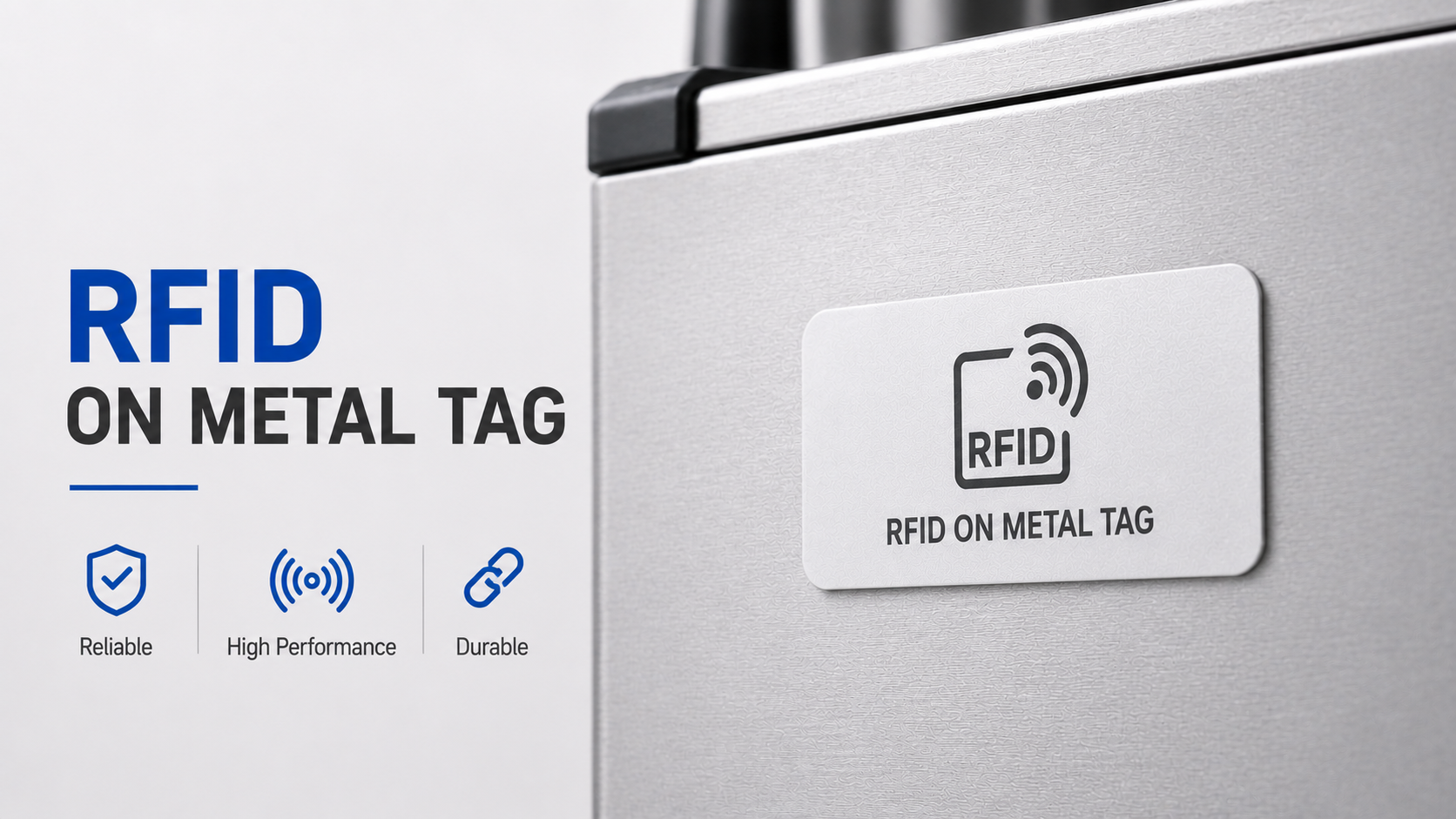
RFID On Metal Tag
Why Do Standard RFID Tags Perform Poorly in Metal Environments?
As mentioned in many previous articles, RFID systems operating in environments containing metal and liquid will inevitably experience impacts on their performance and stability.
Standard passive RFID tags operate on the principle of backscatter coupling. The tag harvests energy from the radio waves emitted by the RFID reader to activate its internal chip, then alters its antenna impedance to reflect data back. This process requires absolute precision.
However, metal surfaces completely disrupt this delicate balance through physical phenomena such as signal reflection and cancellation, antenna detuning, and the partial absorption of RF waves, which effectively “disables” the RFID tag from the reader’s perspective. These are the reasons why standard RFID tags can become virtually “useless” when deployed in metal-rich environments.
Below is an overview of RFID on-metal labels. New users can refer to this guide to better understand the technology and learn how to select suitable RFID tags for their applications.
What Is an RFID On-Metal Label?
An RFID on-metal label, also known as an RFID On-Metal Tag or RFID Anti-Metal Tag, is a specialized RFID label designed and manufactured using anti-interference materials. This design enables the RFID label to operate reliably on metal surfaces while maintaining long read distances and exceptional accuracy.
This type of RFID label is commonly used in environments containing metal objects and liquids.
Structure of RFID On-Metal Labels
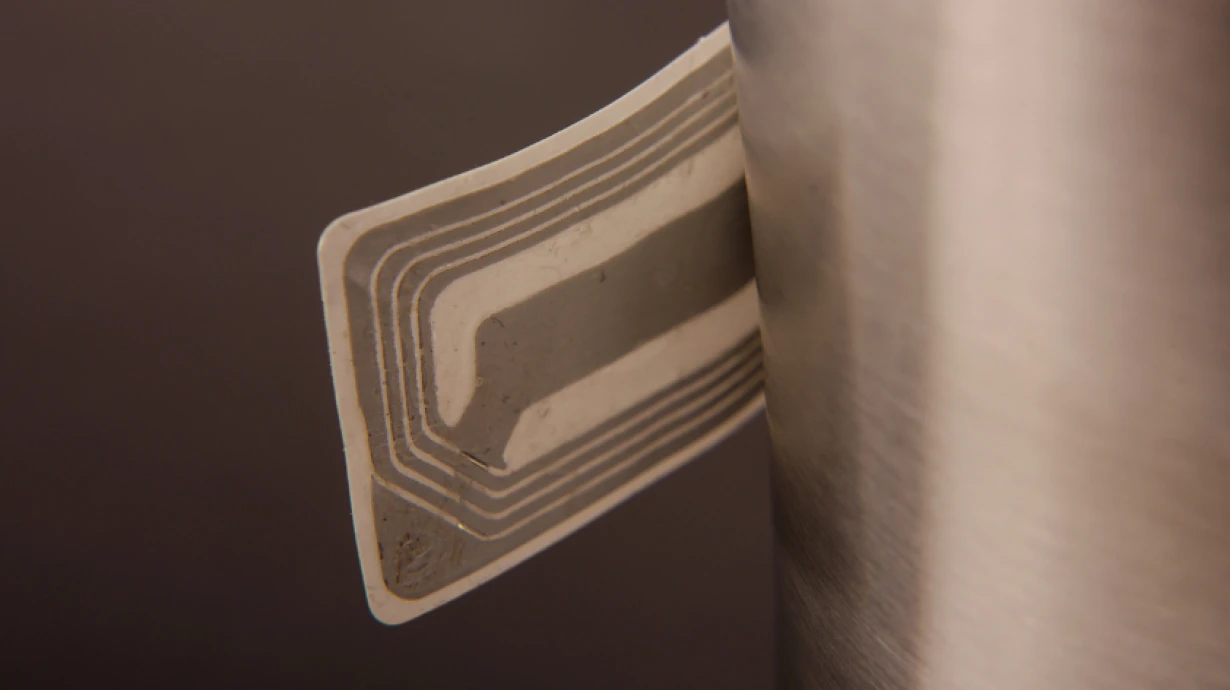
An RFID label for metal surfaces consists of the following key components:
The outer protective layer is typically made from durable ABS plastic, PPS, or similar materials. It protects internal components from physical impacts, moisture, chemicals, and extreme temperatures. This layer can also be customized with barcodes, logos, and company information.
RFID chip: The core component that stores and processes data.
Insulating substrate/spacer layer: Provides the required separation between the antenna and the metal surface. This layer may consist of foam spacers, FR-4 fiberglass boards, or high-performance ceramic materials.
A ferrite layer positioned beneath the antenna to absorb magnetic interference and focus the electromagnetic field.
An industrial adhesive layer for attaching the RFID label to assets.
In summary, RFID anti-metal tags are much more than a chip attached to a foam layer. They are the result of advanced material science and intelligent antenna design, ensuring reliable asset tracking in harsh industrial environments containing metal and liquids.
Outstanding Advantages of RFID On-Metal Labels
RFID on-metal labels offer numerous advantages that solve RFID signal interference issues that conventional RFID tags cannot overcome. Thanks to their multi-layer construction, which incorporates spacer materials and magnetic absorption layers, RFID labels for metal surfaces can effectively eliminate signal reflection and attenuation, allowing the antenna to resonate properly and communicate efficiently with RFID readers.
Outstanding Advantages of RFID On-Metal Labels
RFID on-metal labels support long-range, contactless reading and can achieve reading distances of up to 15 meters when operating with UHF RFID frequencies.
Another major advantage of RFID labels mounted on metal surfaces is their ability to scan hundreds of RFID tags simultaneously within seconds, significantly improving inventory and asset management efficiency.
RFID anti-metal labels provide stable performance with reading accuracy rates of up to 99%, helping eliminate the blind spots associated with older identification technologies.
Additionally, many RFID metal tags are designed to be waterproof and resistant to moisture, oil, chemicals, and corrosion. This exceptional durability helps businesses reduce operational costs while improving overall efficiency.
Types of RFID On-Metal Labels
Each RFID on-metal product is designed with unique materials, structures, and performance characteristics to suit different operating environments.
Understanding the differences between these RFID tags is essential for selecting the most cost-effective solution while ensuring long-term operational performance.
Popular RFID on-metal labels and tags include:
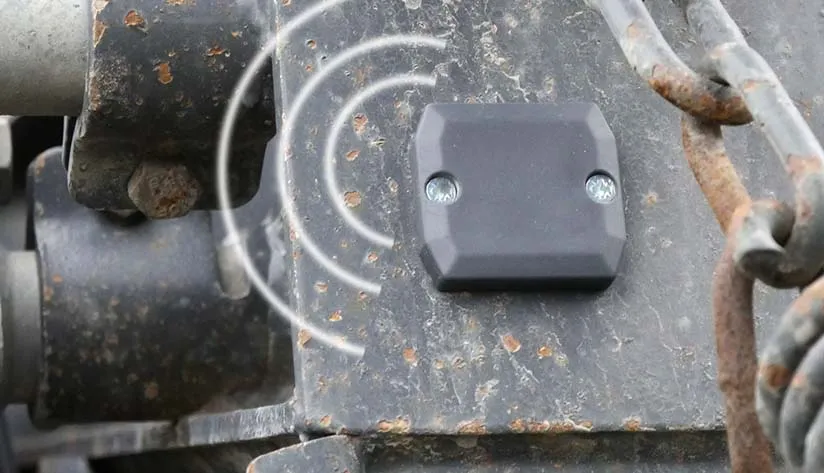
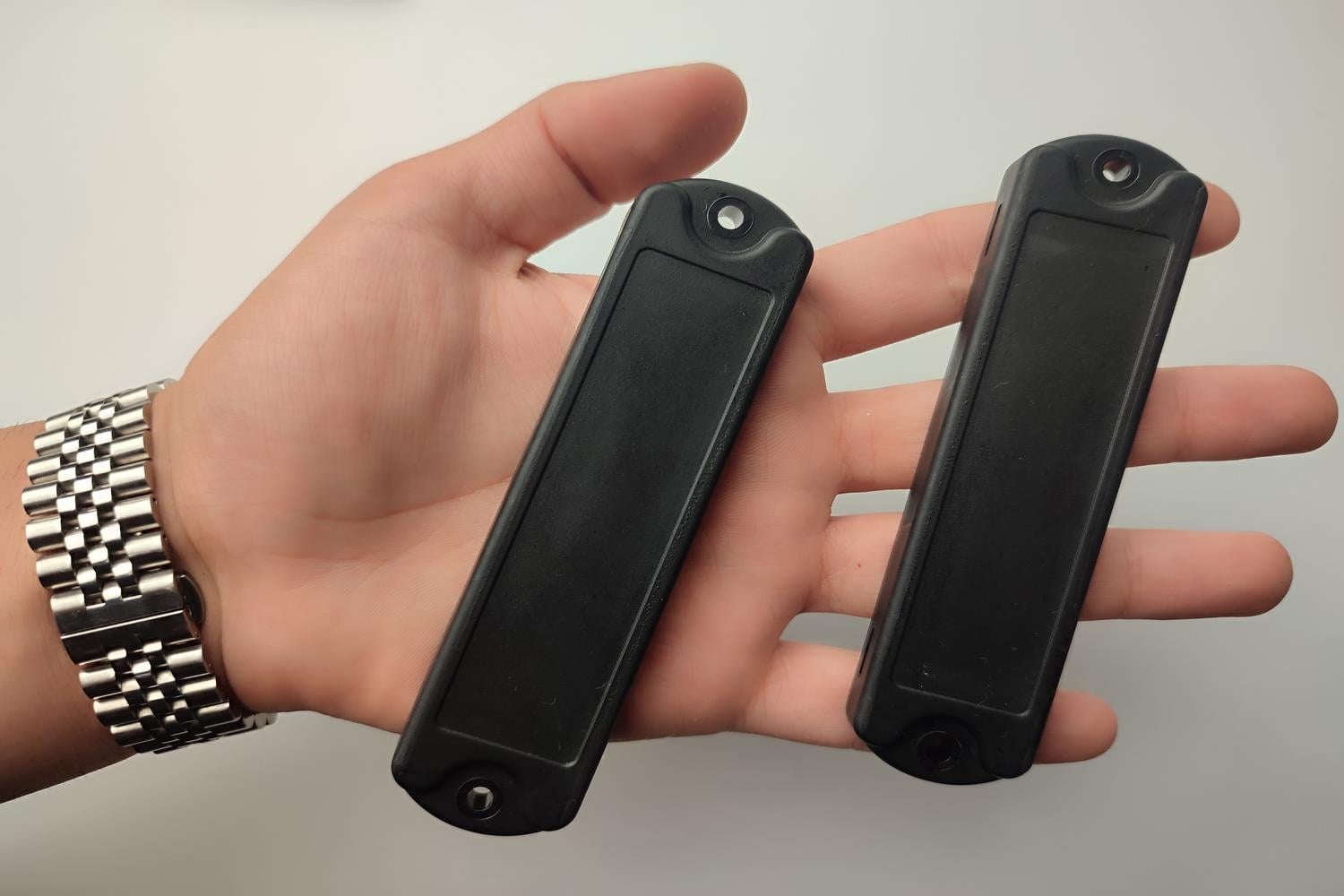
Rigid RFID Anti-Metal Tags
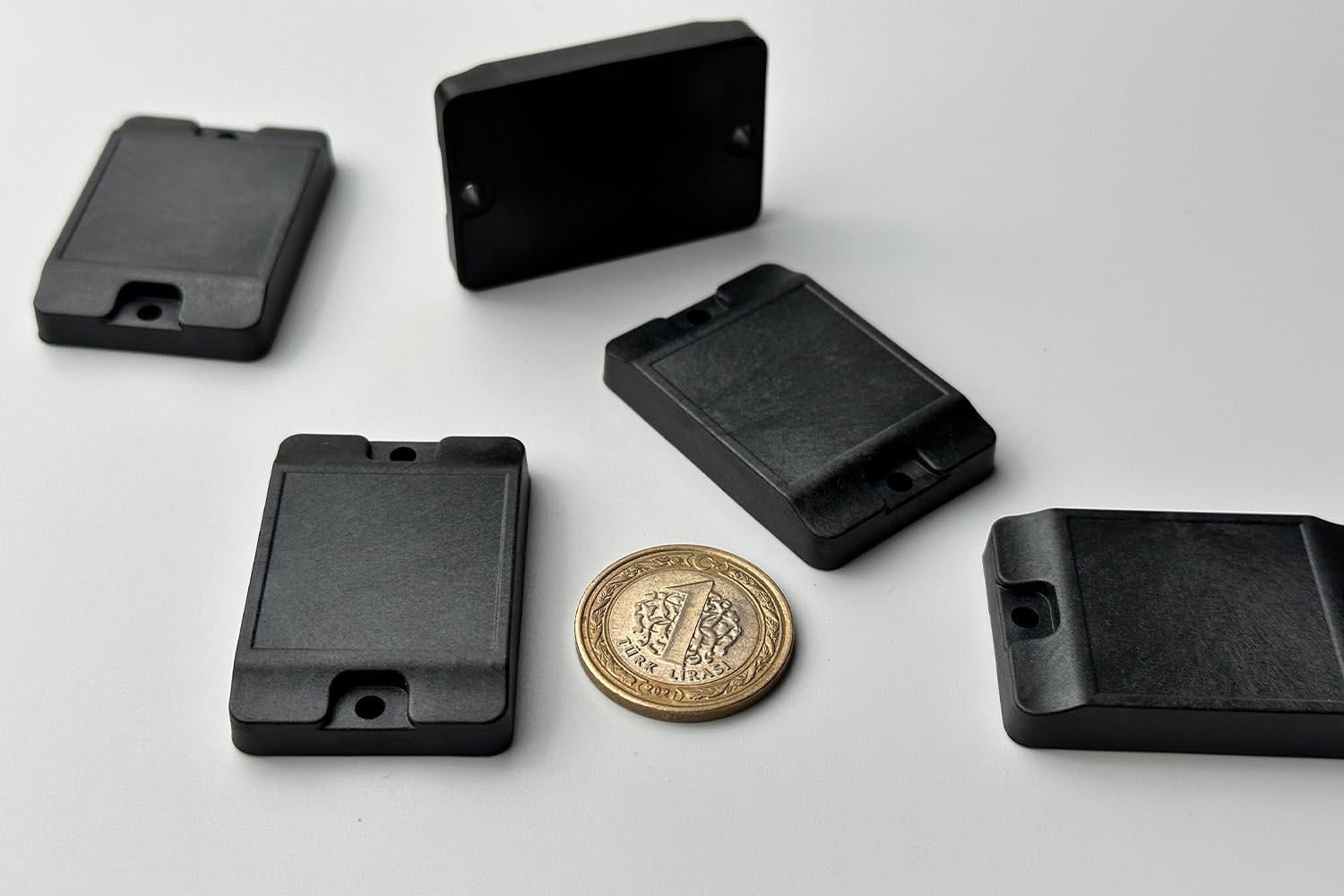
Rigid RFID anti-metal tags are among the most commonly used RFID solutions for metal environments. They are designed like protective shields that safeguard the RFID core from harsh environmental conditions.
The housing of these anti-metal RFID tags is typically made from durable ABS, PPS, or similar industrial-grade materials.
Installation methods commonly include:
Screw mounting
Riveting
Cable ties
Industrial-strength adhesive
Rigid RFID Anti-Metal Tag
The main advantages of rigid RFID tags include:
Excellent mechanical durability
Chemical resistance
High-temperature resistance
Waterproof performance
Long read range
Stable operation in demanding environments
These RFID tags are widely used for tracking:
Industrial machinery
Shipping containers
Steel pallets
Construction equipment
Heavy-duty assets
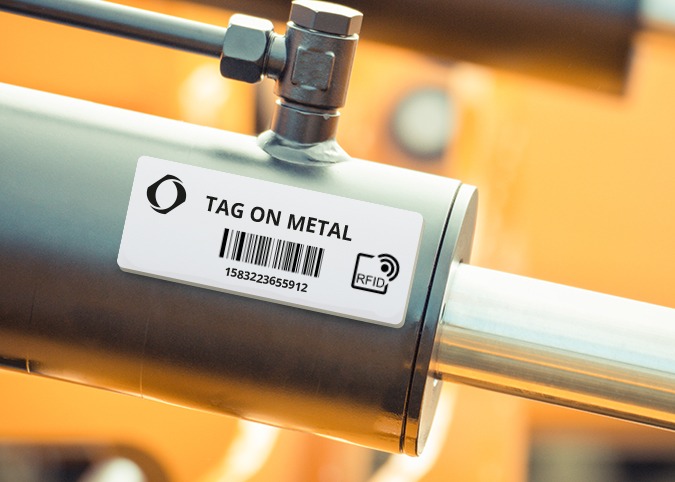
Flexible RFID On-Metal Labels
Flexible RFID on-metal labels are ideal for small devices and curved metal surfaces.
Their structure typically includes:
PET printable top layer
RFID inlay
Thin insulating layer
Magnetic shielding layer
Industrial adhesive layer
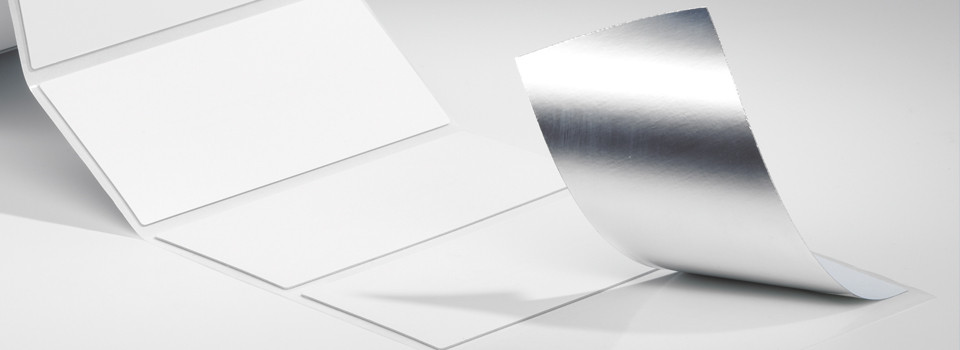
Flexible RFID On-Metal Label
The key benefits of flexible RFID labels include:
Ability to conform to curved surfaces
Printable logos and barcodes
Lightweight design
Easy deployment
Using dedicated RFID printers, users can print asset information, serial numbers, QR codes, and company logos directly onto the label.
These labels are commonly used for:
IT asset management
Medical equipment tracking
Cylinders and tanks
Industrial tools
Embedded RFID Tags
Some RFID tags, such as the Xerafy Dash series, can be embedded directly into metal objects during or after manufacturing.
To maximize protection, the tag is completely sealed with industrial epoxy after installation.
Thanks to their compact size and unique integration capability, embedded RFID tags are widely used in:
Medical equipment
Surgical instruments
Industrial hand tools
Precision manufacturing applications
Ceramic RFID Tags for Metal Surfaces
When conventional plastics and flexible materials fail under extreme temperatures, ceramic RFID tags become the ideal solution.
These RFID labels use specialized ceramic substrates with high dielectric constants, enabling compact antenna designs without compromising RF performance.
These RFID tags are typically installed using:
Industrial high-temperature epoxy adhesives
Embedded mounting in pre-machined grooves
Permanent integration into metal assets
Applications of RFID On-Metal Labels in Businesses
Applications of RFID On-Metal Labels in Businesses
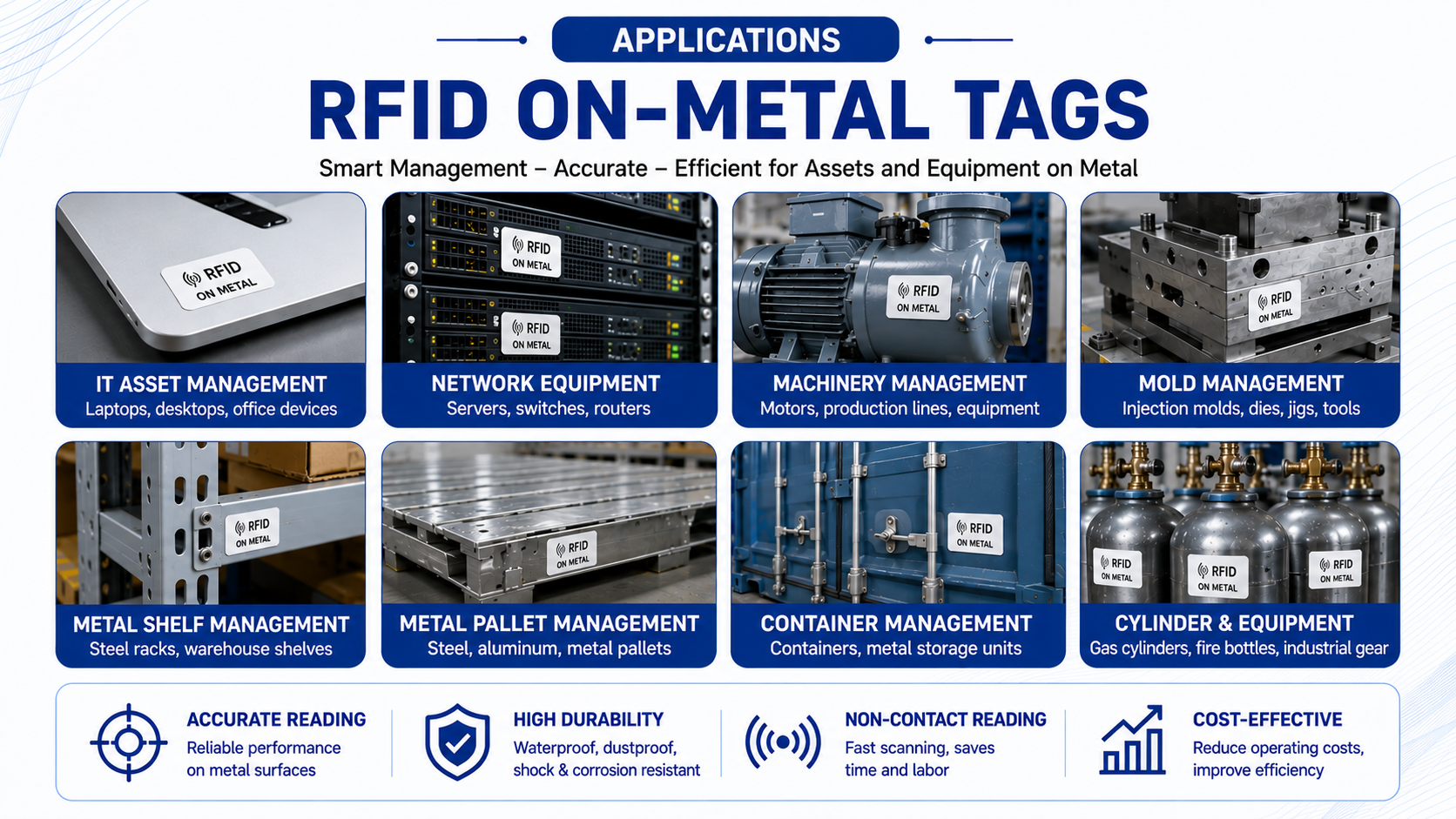
RFID anti-metal labels offer highly flexible applications and are widely used across numerous industries. They are especially suitable for RFID solutions in metal-rich environments.
Common applications include:
Tracking factory tools and industrial equipment, particularly in the aerospace industry.
Monitoring work-in-progress (WIP) products and automatically updating production status in manufacturing systems while maintaining complete production histories.
Managing IT assets such as laptops, servers, networking devices, and office equipment.
Healthcare applications, ensuring surgical trays contain the correct instruments while automatically recording sterilization histories to comply with strict medical standards.
The application of RFID technology in tracking components, medical equipment, and industrial assets helps businesses reduce operating costs, enable real-time visibility, automate processes, and achieve outstanding accuracy.
How to Choose the Right RFID On-Metal Label
Several factors should be considered when selecting an RFID anti-metal label, including cost, material, size, shape, operating environment, and read range.
Frequency Range: UHF RFID technology typically operates between 860 MHz and 960 MHz. However, specific frequencies vary by region. For example, Japan uses 916–921 MHz, while Europe operates within 865–868 MHz.
Read Sensitivity: This specification indicates the minimum RF power required for a tag to activate and successfully communicate with the RFID reader. For example, a tag rated at -24 dBm is more sensitive than one rated at -20 dBm.
Write Sensitivity: Write sensitivity measures the minimum RF power required to write new data into the RFID chip’s memory.
IP Rating: The IP rating defines the level of protection provided against dust and water ingress. For outdoor or industrial applications, RFID anti-metal labels with IP67, IP68, or IP69 ratings are highly recommended.
Operating Temperature: The tag’s operating temperature range depends on the RFID chip, antenna material, housing, and adhesive used in construction.
Mounting Method: Depending on the application, installation options may include industrial adhesive, screw mounting, riveting, or embedded installation.
How to Choose RFID On-Metal Labels
In addition to the factors above, businesses should evaluate their budget and expected ROI before selecting RFID on-metal labels. Choosing an overly expensive solution that exceeds operational requirements may negatively impact return on investment.
Future Trends of RFID On-Metal Labels
The evolution of RFID on-metal technology is moving far beyond simple identification and asset tracking. It is becoming a critical component of industrial automation and digital transformation.
Below are some key trends businesses should pay attention to:
Integration of RFID with smart sensors, enabling equipment to automatically generate alerts when overheating, vibration anomalies, or operational issues occur.
Miniaturization technology will continue producing micro RFID tags measuring only a few millimeters, making them suitable for electronic components, microchips, and surgical instruments.
Advanced encryption and security technologies will make RFID cloning increasingly difficult, significantly improving asset security and anti-counterfeiting capabilities.
Integration of RFID and Artificial Intelligence (AI), allowing businesses to automate decision-making, analyze millions of RFID events per second, and identify defective products directly on production lines.
Reusable and highly durable RFID anti-metal tags will play an important role in supporting sustainable operations and circular economy initiatives.
IT Nam Viet – Trusted RFID Solution Provider in Vietnam
There are many providers of RFID solutions in the market. However, IT Nam Viet has become a strategic partner for hundreds of businesses across Vietnam thanks to the following advantages:
More than 10 years of practical experience implementing RFID solutions in complex industrial environments.
A comprehensive portfolio of RFID products, including RFID labels, anti-metal RFID tags, RFID readers, RFID printers, and software solutions.
Products sourced from globally recognized brands such as Zebra, Impinj, and other leading RFID manufacturers.
Free consultation services to help customers choose the most suitable solution based on operational requirements and budget.
A professional project implementation process customized to each customer’s specific needs.
In addition, IT Nam Viet provides customized RFID anti-metal label manufacturing services, including custom dimensions, RFID chip selection, antenna design, and application-specific requirements to ensure optimal compatibility for every project.
Contact our Hotline at (+84)962.888.179 for consultation and support.
Most rigid RFID tags made from ABS, PCB, or industrial-grade materials are rated IP67 or IP68, making them fully waterproof and capable of withstanding immersion and high-pressure cleaning processes.
RFID on-metal labels can typically be read from distances ranging between 1 and 15 meters. NFC/HF tags generally have shorter reading distances of approximately 1–5 cm due to near-field communication characteristics.
RFID on-metal tags typically offer a long service life and can remain operational for decades under normal conditions. However, lifespan may vary depending on exposure to high temperatures, corrosive chemicals, and harsh industrial environments.
The cost of RFID anti-metal tags depends on factors such as isolation material, read range, protection rating, mounting method, and overall design. In general, RFID on-metal labels vary significantly in price depending on application requirements and performance specifications.
The information above provides a comprehensive overview of RFID On-Metal Labels for businesses seeking reliable asset identification and tracking solutions. If you need professional RFID consultation, please contact us for prompt assistance.
Hotline: (+84) 962.888.179
Email: Info@chiprfid.vn
Head Office: 177/22 National Highway 1K, Linh Xuan Ward, Ho Chi Minh City, Vietnam
Showroom & Working Office: 88 Street No. 15, Van Phuc City Urban Area, Hiep Binh Ward, Ho Chi Minh City, Vietnam
Cambodia Branch: No. 6 Street 24BT, Thnaot Chrum, Boeung Tumpun 2, Khan Mean Chey, Phnom Penh, Cambodia
My name is Le Nam Viet, currently FOUNDER & CEO of Nam Viet IT Company, I graduated from Ho Chi Minh Polytechnic University. I have more than 3 years of experience providing RFID chip technology solutions, RFID scanners, barcode labels and barcode readers. It’s a pleasure to share my knowledge with readers.




 Tiếng Việt